Rhythm Is a Body Problem
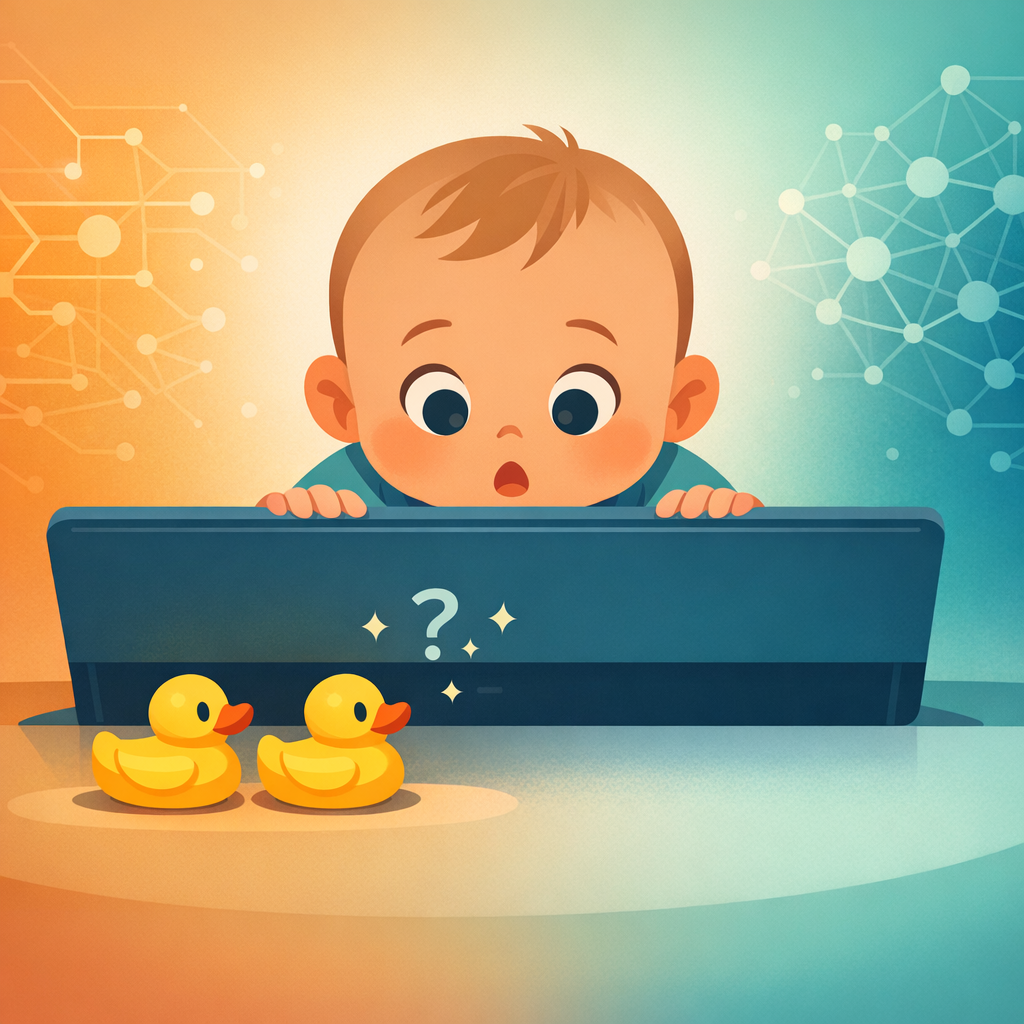
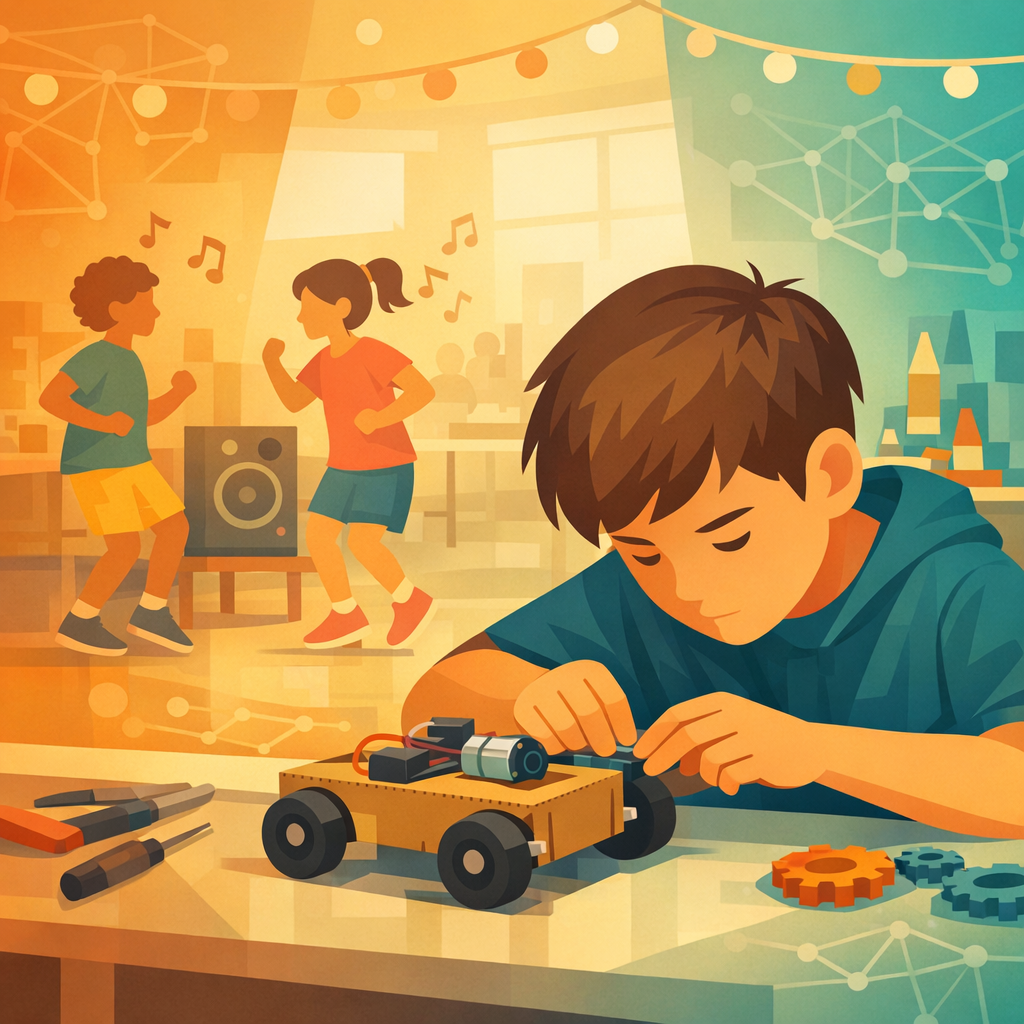
Babies keep time before they can walk. AI generates music by counting tokens. The gap between these two things reveals something fundamental about what rhythm actually is — and why closing it matters.
Raf Delgado·
Vygotsky noticed that children talk themselves through problems — and then stop. Chain-of-thought prompting in AI rediscovered the same trick decades later. Here's what the parallel reveals, and where it quietly falls apart.

Babies keep time before they can walk. AI generates music by counting tokens. The gap between these two things reveals something fundamental about what rhythm actually is — and why closing it matters.
Raf Delgado·

Children are built to extract general principles from ostensive instruction — an evolved system that comes online at 9 months. AI systems can be trained on feedback, but they can't truly be taught. Here's the gap that matters most for every classroom deploying AI right now.
Raf Delgado·
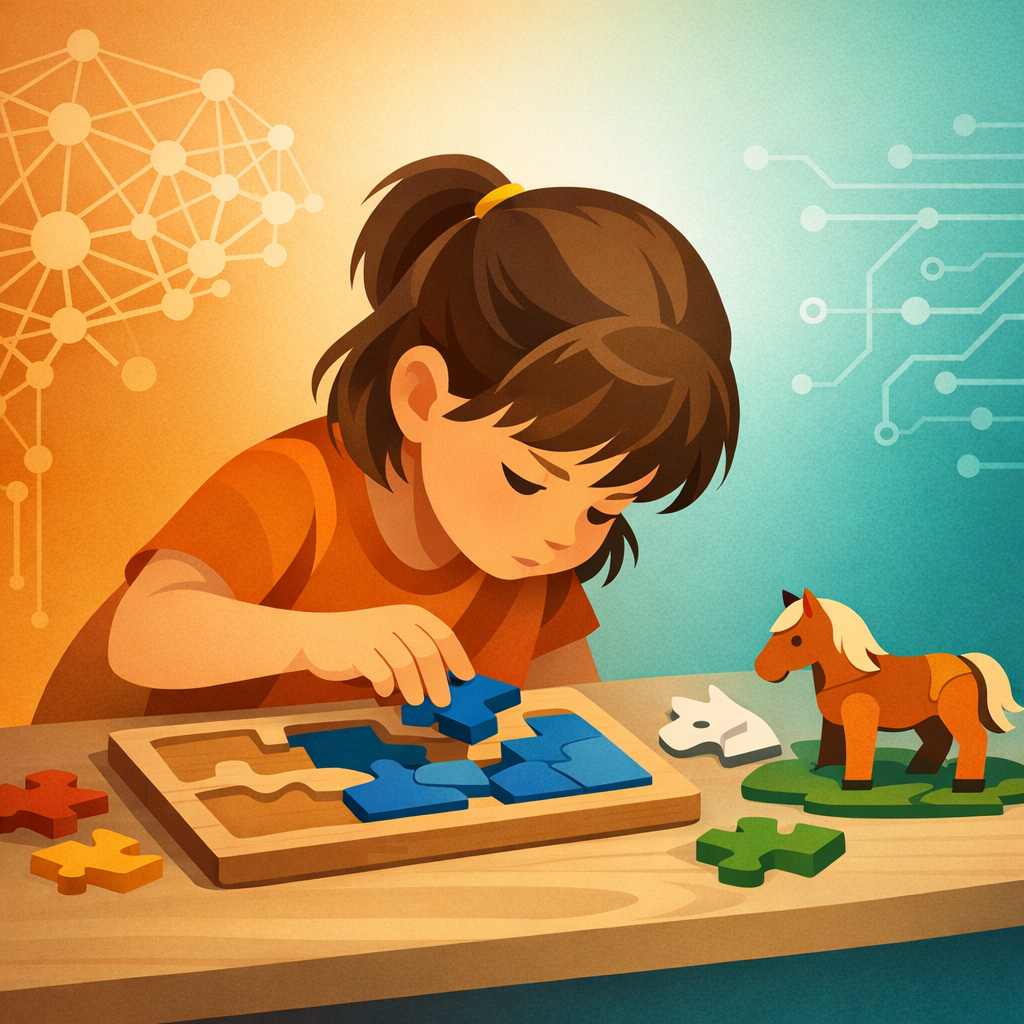
Preschoolers beat GPT-o1, GPT-4V, and LLaVA on simple visual analogy tasks. The gap reveals something foundational about how children — and machines — actually reason about structure.
Maren Solis·
Babies detect mathematical impossibilities before they can say a number. AI systems that ace calculus stumble on the quantity-sense that infants master without instruction. Here's what the gap tells us about the architecture of learning.
Raf Delgado·
Thirty-something AI tools evaluated for school curricula. Almost none had been tested specifically on children. The science of developmental variation explains why that's not just a gap in documentation — it's a design failure with a long and troubling history.
Jules Okafor·
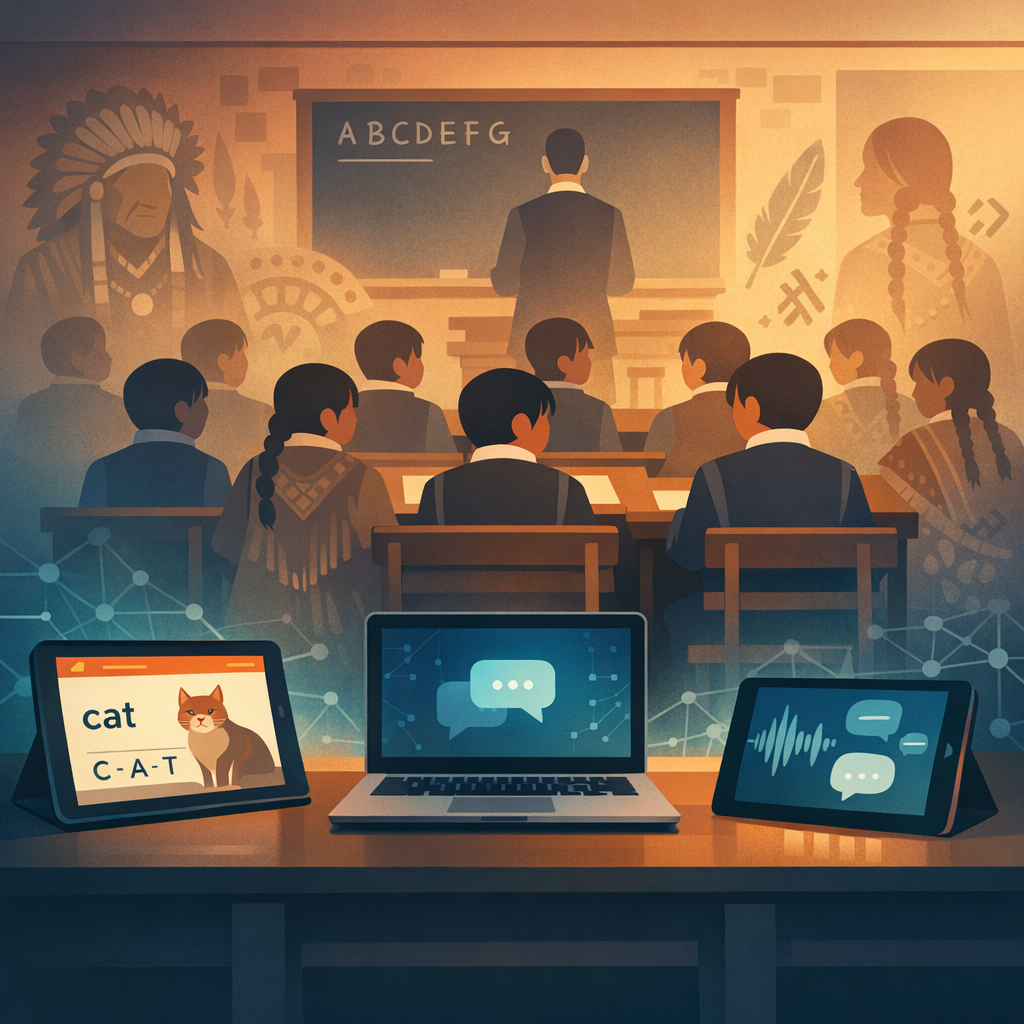
Bilingual children develop metalinguistic superpowers by navigating two languages. AI systems can "speak" hundreds — and understand none the way humans do. The question isn't just neuroscience. It's about whose languages we're choosing to build into our systems, and what we're telling children when we don't.
Jules Okafor·