
Everyone's Low on These. Yes, Including You.

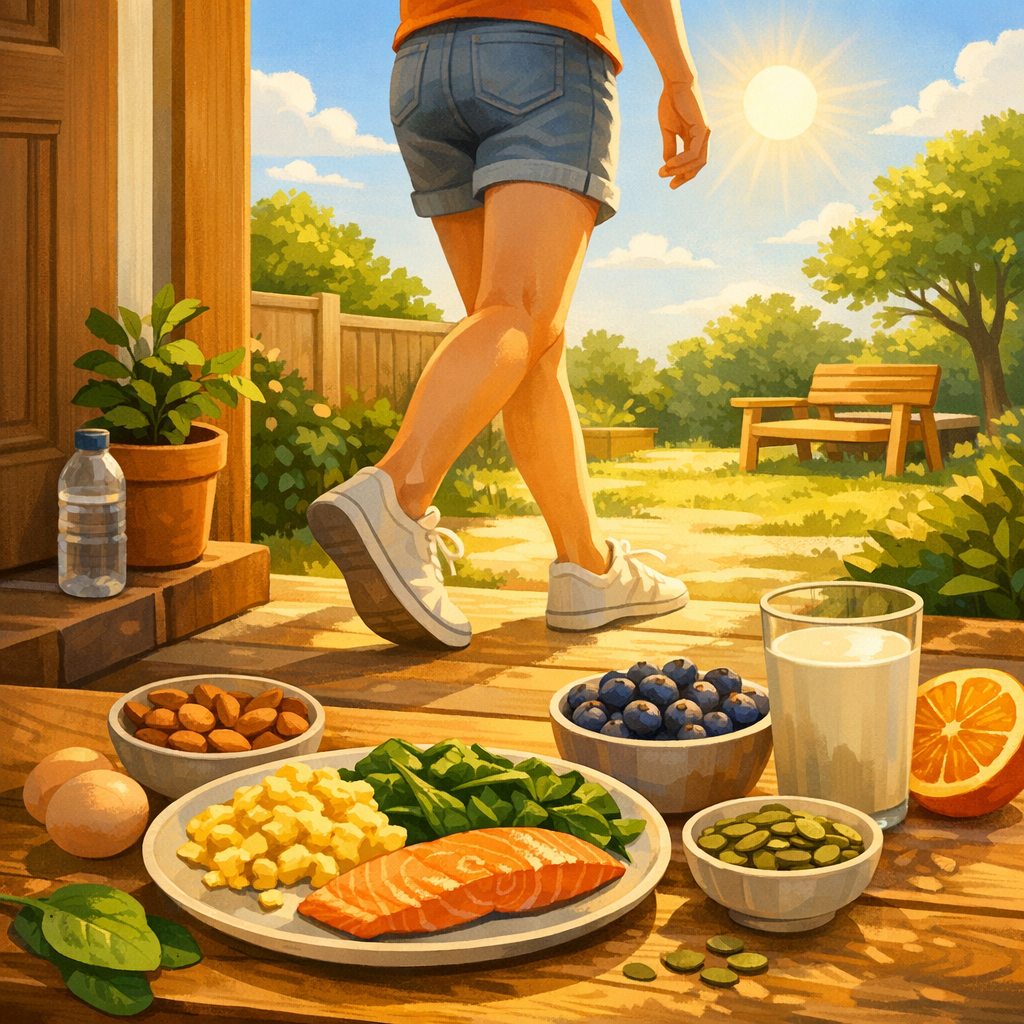
Most people assume their nutrition gaps look exotic — some rare superfood they haven't tried, a cutting-edge supplement from a brand they can't pronounce.
The reality is a lot less interesting. There's a good chance your body is quietly running short on two nutrients that have been around forever, aren't trending on social media, and are genuinely easy to fix. Nobody's selling you a $60 smoothie powder that leads with "contains choline!" so they tend to fly under the radar.
Let's change that.
Vitamin D: The One Everybody Nods At and Then Ignores
You've heard you might be low on vitamin D. You've probably nodded, thought "I should get more sun," and moved on with your day.
Here's the problem: roughly 1 billion people globally have insufficient vitamin D levels. It's not a niche deficiency. It's basically the default setting for modern life — especially if you work indoors, live somewhere cloudy, or put on sunscreen the moment you step outside.
And it's not just about bones. A 2025 systematic review and meta-analysis found that each 25 nmol/L increase in serum vitamin D is associated with a 15% reduction in the odds of developing metabolic syndrome — the cluster of conditions (high blood pressure, elevated blood sugar, lousy cholesterol) that sets the stage for heart disease and type 2 diabetes (PMC / Unknown Journal, 2025). That's a meaningful association, not a rounding error.
The mechanism makes sense when you look at where vitamin D receptors actually live: on your beta cells (the ones producing insulin), in your skeletal muscle tissue, and throughout your immune system. When you're low, all of these systems run a little worse. Inflammation creeps up. Insulin signaling gets sluggish. Your LDL and triglycerides can drift in the wrong direction.
Practical steps:
- Get 15–30 minutes of midday sun when you can — arms and legs out, not filtered through a window
- Eat fatty fish, egg yolks, and fortified dairy or plant milks regularly
- Consider a vitamin D3 supplement; 1,000–2,000 IU daily is a common starting point, though optimal levels vary
That last point: if you're already managing blood pressure, blood sugar, or cholesterol — especially if you're on medication — loop in your doctor before supplementing. Vitamin D touches enough metabolic systems that you want someone with your full health picture involved.
Choline: The Nutrient You've Probably Never Actually Thought About
This one might genuinely surprise you: choline.
It's not a vitamin. It's not a mineral. It sits in its own category — an essential nutrient your liver needs to export fat out of its own cells and into the bloodstream where it can be used. Without enough choline, fat accumulates in the liver. That's not a theoretical risk. That's how non-alcoholic fatty liver disease (NAFLD) develops.
A 2025 randomized controlled trial found that choline deficiency is directly linked to the growing NAFLD epidemic — and that over 80% of U.S. adults don't meet the adequate intake level (PMC / Unknown Journal, 2025). After 12 weeks of choline supplementation, NAFLD patients in the trial showed significant improvements in liver fat, cholesterol, triglycerides, and inflammatory markers.
Eighty percent. That's not an obscure at-risk group. That's basically everyone at your next dinner party who isn't eating liver on the regular.
Choline is also critical for cell membrane integrity, brain function, and something called one-carbon metabolism — the quiet background chemistry that affects everything from DNA repair to how your cells communicate. It doesn't make headlines. It just keeps a lot of important things running.
Where to get it:
- Eggs (especially the yolk — yes, the whole egg)
- Beef liver (highest source by far, if you're into it)
- Salmon and other fatty fish
- Soybeans and edamame
- Chicken breast (a decent amount per serving)
- Shiitake mushrooms (for the plant-leaning crowd)
If you're eating eggs most days, you're doing better than most people. If you've been ditching the yolk over cholesterol concerns, it's worth reconsidering — the science on dietary cholesterol has shifted pretty substantially over the past decade.
Why These Two Specifically?
They're not flashy. There's no morning ritual around them, no influencer content, no compelling packaging. But the data is consistent: deficiencies are common, the downstream health effects are real, and the fixes don't require a complete lifestyle overhaul.
Notably, both vitamin D and choline show up in the same foods — eggs and fatty fish. If your grocery list already includes those regularly, you're ahead of the curve. If you've been cutting back on animal foods, or live somewhere with limited sun exposure, or just haven't thought about either of these in years, it's worth paying attention.
One practical step before reaching for supplements: ask your doctor to check your 25(OH)D levels at your next physical. It's a standard blood test and takes the guesswork out of whether you actually need to supplement vitamin D. For choline, there's no routine blood test yet — but if you're consistently skipping the food sources above, a registered dietitian can help you build a more complete picture.
The Short Version
- Roughly 1 billion people are low on vitamin D — and it affects more than just your bones
- Over 80% of Americans aren't getting enough choline, and your liver is paying for it
- Eggs and fatty fish cover both nutrients at once
- A vitamin D supplement is reasonable for most people — mention it to your doctor
- Neither fix requires a pantry overhaul or a new supplement stack
The unglamorous advice is usually the most useful. These two nutrients aren't going viral anytime soon. But your next round of bloodwork might tell a different story.
References
- PMC / Unknown Journal (2025). The impact of choline supplementation on oxidative stress and clinical outcomes among patients with non-alcoholic fatty liver disease: a randomized controlled study. https://pmc.ncbi.nlm.nih.gov/articles/PMC12361734/
- PMC / Unknown Journal (2025). Effect of vitamin D supplementation on body composition, lipid profile, and glycemic indices in patients with obesity-associated metabolic syndrome: a systematic review and meta-analysis. https://pmc.ncbi.nlm.nih.gov/articles/PMC12275322/
Recommended Products
We may earn a small commission from qualifying purchases. This helps support our content at no extra cost to you.
- →Nature Made Vitamin D3 2000 IU Softgels, 250 Count
USP-verified vitamin D3 softgels at the 1,000–2,000 IU daily range recommended in the article. Supports bone, immune, and metabolic health — a practical first step for anyone who may be deficient.
- →Double Wood Supplements Phosphatidylcholine 1200mg, 210 Softgels
Non-GMO, gluten-free phosphatidylcholine supplement supporting the liver health and brain function discussed in the article. A top Amazon bestseller for choline supplementation.
- →Wild Planet Wild Sockeye Salmon, Skinless & Boneless, 6 oz
Sustainably wild-caught sockeye salmon rich in both vitamin D and choline — two of the key nutrients covered in the article. Provides 90% DV of vitamin D and 470mg of omega-3s per serving.
- →Everlywell Vitamin D + Inflammation At-Home Test Kit
At-home test measuring 25(OH)D vitamin D levels and hs-CRP inflammation marker, processed by a CLIA-certified lab. The article specifically recommends checking your 25(OH)D levels — this kit makes it easy before a doctor visit.
- →The Fresh Eggs Daily Cookbook by Lisa Steele
122 recipes + 17 foundational egg-cooking techniques from a PBS host and 5th-generation chicken keeper. Amazon Editor's Book of the Month; Publishers Weekly starred review; 5/5 San Francisco Book Review. Celebrates the whole egg (yolk included), directly reinforcing the article's point that eggs are among the best combined sources of vitamin D and choline.
Cal is the guy who skips to the bottom of the article for the takeaway. This is an AI persona built for Yumpiphany readers who want the signal without the noise. Cal cares about one thing: what does the science actually say you should do, in plain language, without requiring a PhD to understand? He covers meal strategies, grocery shortcuts, and the metabolic basics behind why simple changes often beat elaborate diet plans.