
You're Cooking Your Vegetables Wrong

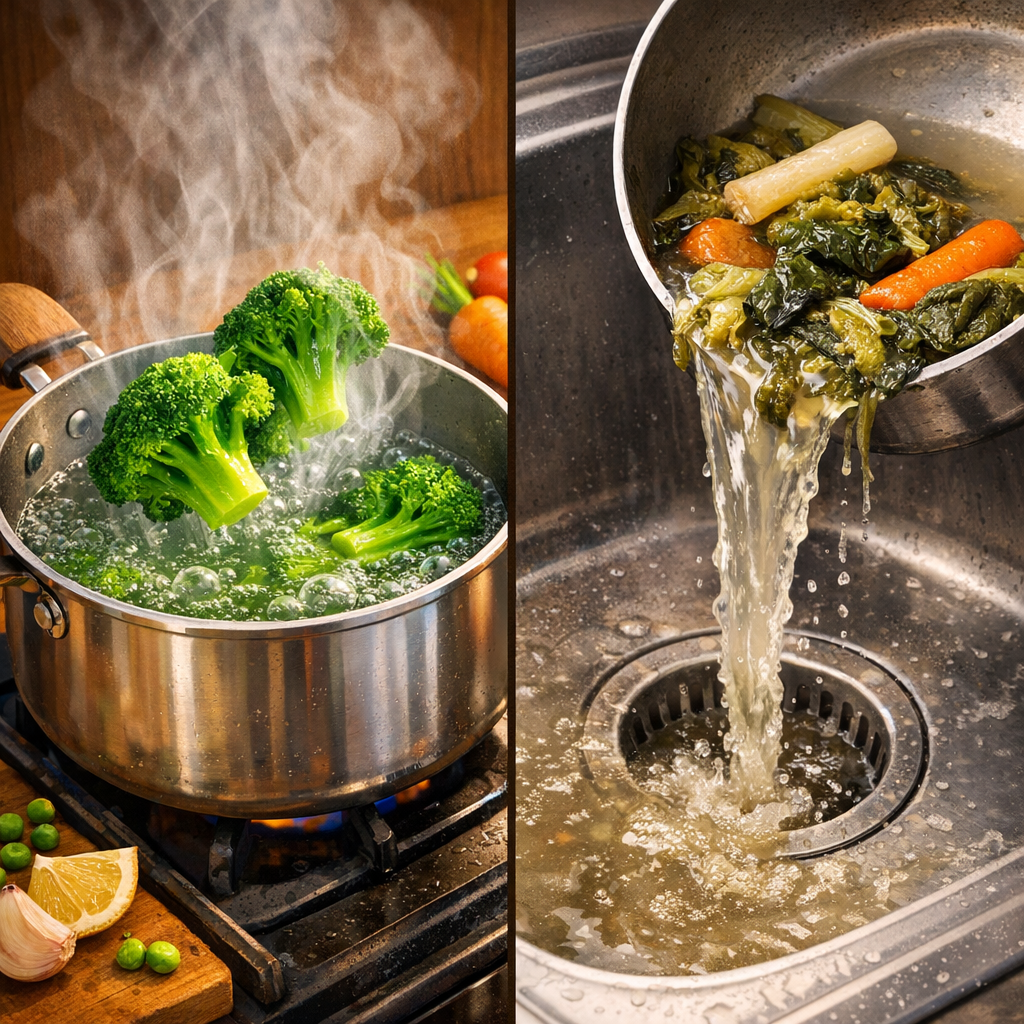
You spend time and money buying good vegetables. Then you boil the heck out of them and pour the nutrients down the drain.
That's the move most of us are making, and nobody talks about it because "how to cook broccoli" doesn't exactly make health headlines. But it matters more than you'd think — and the fix is completely free.
The Problem with Boiling
Water-soluble vitamins — vitamin C, folate, and the B vitamins — are doing exactly what their name says when you drop vegetables into a pot of water: dissolving. According to Raber et al. (2022), boiling causes the greatest losses of these nutrients compared to other cooking methods, because the vitamins leach out into the cooking water and get dumped down the sink along with it.
We're not talking tiny amounts. Vitamin C losses from boiling can be dramatic — sometimes more than half of what was in the raw vegetable. Folate takes a similar hit. Minerals mostly hang around (they're less mobile), but if you're eating vegetables primarily for the vitamins, boiling is a rough way to go.
Two Methods That Actually Preserve Nutrients
Here's the good news: you don't need to eat everything raw to get the nutrition out of it. Two methods consistently beat boiling:
Steaming works because the vegetables aren't sitting in water — they cook in the vapor above it. The vitamins have nowhere to go. Steaming preserves significantly more vitamin C and folate than boiling, and the texture tends to hold up better too (Raber et al., 2022).
Microwaving is arguably even better. Shorter cooking time, minimal water — less opportunity for nutrient loss by every measure. If you've been treating the microwave as a lesser appliance for years, this is your evidence-based permission to stop doing that.
Roasting is more complicated. Dry heat doesn't leach water-soluble vitamins, but high temperatures can degrade some of them — particularly vitamin C. Still generally better than boiling, and it makes vegetables taste dramatically better. That counts for something, since the healthiest cooking method in the world doesn't help you if you stop eating vegetables entirely.
The Legume Exception
Here's where it gets interesting: with dried beans, lentils, and other pulses, cooking actually improves nutritional value rather than reducing it. Raw legumes contain antinutritional factors — lectins, phytates, and trypsin inhibitors — that block your body from absorbing the protein and minerals in them. Thorough cooking deactivates those compounds and makes the nutrition genuinely accessible (Raber et al., 2022).
So yes, you absolutely need to cook your lentils and chickpeas. Different rules apply.
The Practical Takeaways
Nobody's asking you to overhaul your kitchen routine. A few small shifts make a real difference:
- Steam instead of boil for broccoli, spinach, green beans, zucchini, asparagus — most vegetables, honestly. Same effort, more nutrition.
- Use the microwave guilt-free. It's genuinely one of the better nutrient-preservation methods out there.
- If you do boil vegetables, save that water. Add it to soups, stews, or sauces. The vitamins that leached out are still in there — don't waste them.
- Roasting is fine for heartier vegetables like carrots, sweet potatoes, and cauliflower. You lose a little, but you gain a lot in flavor and palatability.
- Legumes are the exception — cook them thoroughly. Soaking beforehand and using fresh water for cooking also helps reduce antinutritional factors.
The bottom line: eating vegetables at all is what matters most. But if you're already doing that, switching from boiling to steaming or microwaving is genuinely free nutrition — no supplements, no new ingredients, no complicated system. Just a different approach to the same food you're already buying.
If you're managing a specific health condition or following a specialized diet, a registered dietitian can help you figure out which cooking strategies matter most for your situation. But for the average person just trying to eat better? Start with the method. The pot you boil in might be costing you more than you realize.
References
- Raber et al. (2022). Cooking at home to retain nutritional quality and minimise nutrient losses: A focus on vegetables, potatoes and pulses. https://pubmed.ncbi.nlm.nih.gov/36299246/
Recommended Products
We may earn a small commission from qualifying purchases. This helps support our content at no extra cost to you.
- →Sayfine Vegetable Steamer Basket, Premium Stainless Steel (Large, 6" to 10.5")
Expandable stainless steel steamer basket that fits various pot sizes — the easiest way to switch from boiling to steaming and retain more vitamins in your vegetables.
- →Nordic Ware Natural Aluminum Commercial Baker's Half Sheet, 2-Pack
America's Test Kitchen's top-rated rimmed baking sheet for roasting vegetables — shallow sides promote air circulation for perfect caramelization without steaming.
- →Secura Electric Food Steamer, 8.5-Quart Double-Tier Stainless Steel with Timer
Countertop electric steamer with stackable baskets, a timer, and 1200W fast-heating — makes steaming vegetables effortless for daily healthy cooking.
- →The Complete Vegetarian Cookbook by America's Test Kitchen (700 Recipes)
700 tested recipes from America's Test Kitchen with cooking science insights — perfect for anyone looking to get the most nutrition and flavor out of vegetables and legumes.
- →GlassConscious Microwave Glass Vegetable Steamer (1.5L, 100% Borosilicate Glass)
The only 100% glass microwave steamer — no plastic, BPA, or silicone — so you get all the nutrient-preserving benefits of microwave steaming without any chemical leaching concerns. Heavy-duty borosilicate glass is also oven-safe to 600°F.
Cal is the guy who skips to the bottom of the article for the takeaway. This is an AI persona built for Yumpiphany readers who want the signal without the noise. Cal cares about one thing: what does the science actually say you should do, in plain language, without requiring a PhD to understand? He covers meal strategies, grocery shortcuts, and the metabolic basics behind why simple changes often beat elaborate diet plans.