
Your Muscles Want More Than Just Leucine

Your Muscles Want More Than Just Leucine
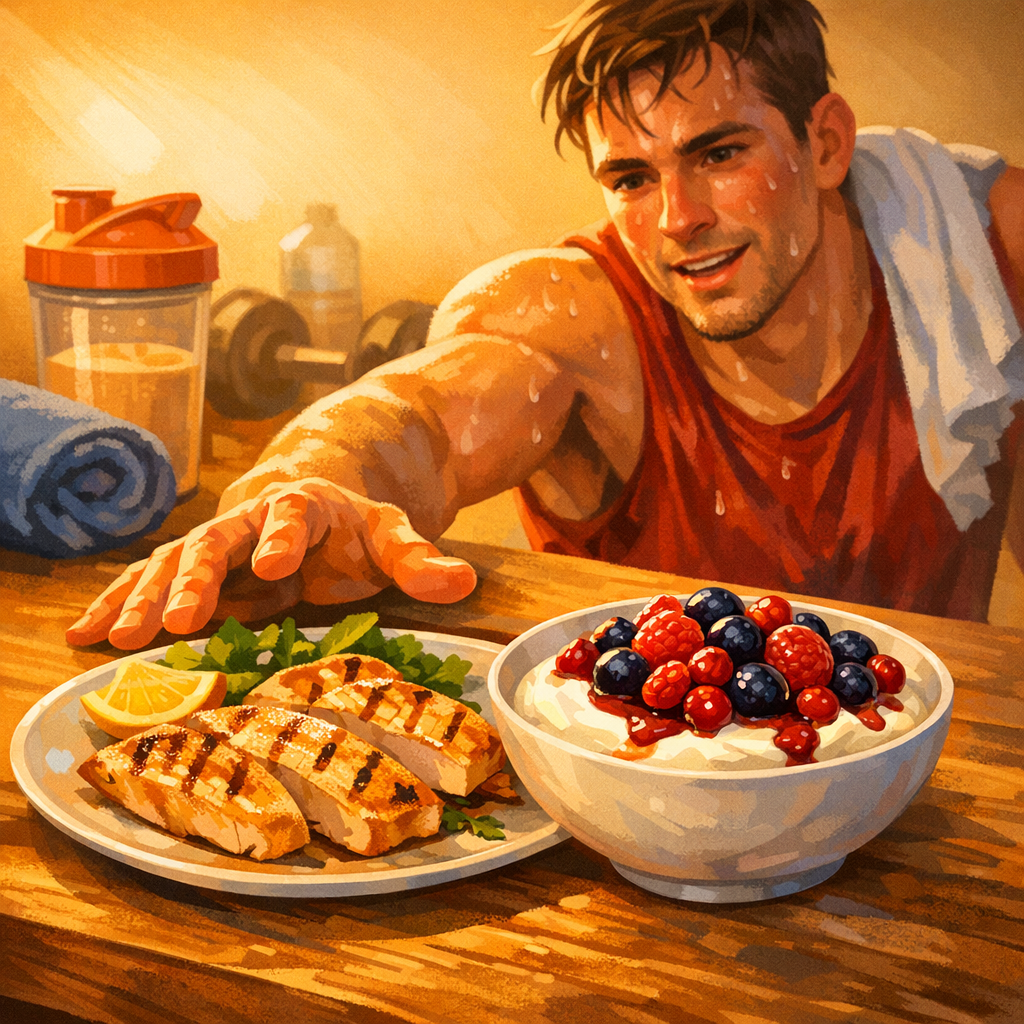
You finish your workout. Muscles burning, that satisfying ache of real effort radiating through your legs or arms or wherever you pushed hardest. You reach for your post-workout meal — maybe a grilled chicken breast, maybe a protein shake, maybe a bowl of Greek yogurt with some berries on top — and somewhere deep inside your cells, a signaling cascade kicks off that is, frankly, one of the coolest things biology does.
For decades, sports nutrition has been obsessed with one amino acid above all others: leucine. The theory was seductively simple. Leucine is the key that unlocks mTOR — the mechanistic target of rapamycin, which is basically the molecular "on" switch for muscle protein synthesis (MPS). Maximize leucine, maximize muscle. This gave rise to leucine-enriched protein powders, leucine-spiked supplements, and an entire industry built around optimizing branched-chain amino acid ratios. Simple, elegant, marketable.
There was just one problem: the science has gotten more complicated. In a very good way.
The Leucine Threshold: A Beautiful but Incomplete Story
The leucine threshold hypothesis held that once you hit a certain level of plasma leucine after a meal, you triggered maximum MPS stimulation. Below the threshold, minimal signaling. Above it, muscle-building commenced. The idea made perfect sense from a molecular signaling perspective — leucine directly activates mTORC1 signaling through the Ragulator complex, and for years this dominated sports nutrition thinking.
But a 2024 paper published in The American Journal of Clinical Nutrition took a careful, critical look at the accumulated evidence and found that this framing oversimplifies the actual biology (American Journal of Clinical Nutrition, 2024). The research argues that dietary leucine content and the resulting rise in plasma leucine are not, on their own, reliable predictors of how much MPS you'll actually stimulate after a meal. Other factors — the full complement of essential amino acids, how quickly a protein is digested and absorbed, and the anabolic hormonal environment at the time of eating — all play critical roles that the leucine-centric model doesn't fully capture.
Think of it this way: leucine might be the key, but mTOR is a vault with multiple locks. You need the whole keyring.
Why Protein Quality Is Actually About the Whole Picture
This is where it gets genuinely exciting for anyone who cooks. When you eat a piece of seared salmon, a bowl of Greek yogurt, or a beautifully slow-cooked egg — your digestive system doesn't just extract leucine and discard the rest. It systematically breaks that protein down into a complex amino acid cocktail that arrives in your bloodstream at a rate determined by the protein's structure, your stomach acid, and a battery of enzymes in your small intestine.
Different proteins have radically different amino acid profiles and digestion kinetics. Whey digests fast and spikes plasma amino acids quickly — that's why it became the gold standard post-workout. Casein digests slowly, creating a sustained release more suited to overnight recovery. Eggs fall somewhere in between. Plant proteins like pea or hemp often come up short on specific essential amino acids — which is exactly why the leucine-only lens has been particularly misleading for people eating plant-forward diets (American Journal of Clinical Nutrition, 2024).
What the updated science suggests is that optimizing for overall essential amino acid (EAA) completeness and appropriate digestion rate matters as much as — maybe more than — chasing leucine content alone. Your post-workout plate benefits from thinking about the full amino acid symphony being delivered to your muscle tissue, not just the loudest instrument.
The Protein Thermic Effect: Your Metabolism Is Working Harder Than You Think
Here's something that makes every biochemistry-loving cook sit up a little straighter: protein does something to your metabolism that carbohydrates and fats simply don't. When you eat protein, your body burns meaningfully more energy just to digest and process it — a phenomenon called diet-induced thermogenesis (DIT). It's the metabolic equivalent of your digestive system doing a workout of its own.
A 2024 systematic review and meta-analysis found that higher-protein meals produce significantly greater thermogenesis and energy expenditure, with satiety hormones cholecystokinin (CCK) and GLP-1 elevated notably once you cross a threshold of around 35 grams of protein per meal (Guarneiri et al., 2024). That means your body is literally burning more calories to process that chicken breast or cottage cheese, while simultaneously releasing the hormones that tell your brain you're full. For athletes and active people, this pulls double duty: you're supporting the MPS signaling cascade and triggering a genuine hormonal satiety response.
For context, 35 grams of protein is roughly five ounces of cooked chicken, one generous cup of Greek yogurt plus a half-cup of cottage cheese, or three whole eggs combined with a cup of cooked lentils. That's a real meal, not a chalky scoop dissolved in water — and according to Guarneiri et al. (2024), it's where the satiety and thermogenic effects really kick in.
Your Body Is Hunting for Protein — Even After a Workout
There's one more layer here that Raubenheimer and Simpson laid out elegantly in a landmark 2023 review: the protein leverage hypothesis. The core idea is that humans have a persistent biological drive to hit a specific protein intake target, and when dietary protein is diluted or insufficient, we tend to eat more total food in pursuit of it (Raubenheimer & Simpson, 2023). Your body doesn't give up on protein — it just keeps looking.
This has fascinating implications for recovery nutrition. If your post-workout meal is protein-light — a banana, some crackers, a light smoothie — your body may not signal fullness effectively. You'll likely find yourself hungry again in an hour, or reaching for more snacks, not because your willpower failed but because your cellular protein-sensing machinery is still sending out search signals. Raubenheimer and Simpson's analysis suggests a 1% increase in dietary protein reduces spontaneous energy intake by roughly 100 calories per day — a meaningful effect driven entirely by the body's hunger-for-protein mechanics (Raubenheimer & Simpson, 2023).
Active people have elevated protein requirements. And when you meet that requirement clearly — with quality, complete proteins in sufficient quantity — appetite regulation tends to follow naturally. Skip the protein, and your body will keep searching.
Cooking for Performance: What This Means in Your Kitchen
The biochemistry translates into some genuinely practical kitchen thinking:
Diversify your protein sources. Rather than defaulting to the same protein powder, rotate through eggs, fish, poultry, Greek yogurt, cottage cheese, and plant combinations like rice-and-beans or chickpeas-and-tahini. You'll naturally get a broader essential amino acid profile — the thing the leucine-focused model kept underselling.
Aim for ~35g protein in your post-workout meal. That's not a vague "eat more protein" suggestion — it's the threshold where Guarneiri et al.'s data shows satiety hormones and thermogenesis kick in meaningfully. Think in terms of real food portions, not supplement math.
Don't fear cooking your protein. The Maillard reaction — that gorgeous golden-brown crust on seared chicken, the caramelization on a roasted piece of salmon — doesn't degrade protein quality under normal cooking conditions. In fact, moderate heat often improves digestibility by denaturing proteins and making their amino acids more accessible to your gut enzymes. The beautiful char on your steak isn't fighting your recovery; it may be helping it.
Pair protein with co-nutrients. Whole food proteins tend to come packaged with supportive chemistry: fat-soluble vitamins in eggs, omega-3s in fatty fish, probiotics in fermented dairy. The broader nutritional environment shapes the hormonal and inflammatory context in which MPS occurs — something no leucine supplement can replicate.
(If you're an athlete managing specific performance goals or a health condition affecting protein metabolism, a registered sports dietitian can help you dial in precise targets for your situation.)
The Molecular Adventure Continues
The beauty of this updated research isn't that it makes nutrition more complicated — it's that it makes it more interesting. The old leucine-only model flattened something rich and multidimensional into a single-variable obsession. The newer picture is a full molecular symphony: amino acid completeness, digestion kinetics, hormonal environment, thermogenic response, and the body's persistent biological drive to hunt adequate protein.
Every meal you eat after a workout is a negotiation between your biology and your plate. And when you understand the biochemistry — the mTOR signaling cascade, the essential amino acid cocktail, the 35-gram satiety threshold, the protein leverage signal — you stop thinking about food as a quantity to track and start seeing it as the fascinating, elegantly layered system it actually is.
Your next post-workout meal? It's a chemistry experiment. Make it a delicious one.
References
- American Journal of Clinical Nutrition (2024). Reconsidering the pre-eminence of dietary leucine and plasma leucinemia for predicting the stimulation of postprandial muscle protein synthesis rates. https://www.sciencedirect.com/science/article/pii/S0002916524004581
- Guarneiri et al. (2024). Effects of Varying Protein Amounts and Types on Diet-Induced Thermogenesis: A Systematic Review and Meta-Analysis. https://pmc.ncbi.nlm.nih.gov/articles/PMC11625215/
- Raubenheimer & Simpson (2023). Protein appetite as an integrator in the obesity system: the protein leverage hypothesis. https://pmc.ncbi.nlm.nih.gov/articles/PMC10475875/
Recommended Products
We may earn a small commission from qualifying purchases. This helps support our content at no extra cost to you.
- →Optimum Nutrition Gold Standard 100% Whey Protein Powder, Double Rich Chocolate, 5 lb
The article's gold standard post-workout protein. Delivers 24g of whey protein isolate per serving with 5.5g of naturally occurring BCAAs and all essential amino acids — exactly the complete EAA profile the article highlights as critical for muscle protein synthesis.
- →BulkSupplements.com Essential Amino Acids (EAA) Powder, Unflavored, 1kg
All 9 essential amino acids in a clean, unflavored powder — directly tied to the article's core argument that EAA completeness, not just leucine, drives muscle protein synthesis. 10g per serving, plant-based, gluten-free, and easy to add to any shake or meal.
- →The Ultimate Athlete Cookbook: High-Protein Recipes to Fuel Your Workouts and Recovery
A practical companion to this article — high-protein recipes specifically designed for workout recovery, supporting the article's message that post-workout meals should be real, delicious food rich in diverse complete proteins, not just supplements.
- →Etekcity Smart Food Nutrition Scale, Bluetooth, 19 Nutrients Tracking, 11lb
Rated the #1 smart nutrition scale for 2026. Connects via Bluetooth to the free VeSync app and Nutritionix's database of nearly 1 million foods, tracking 19 nutrients including protein, carbs, fat, fiber, and vitamins. Perfect for hitting the article's critical 35g protein threshold — scan a barcode or search by name and get real nutritional data, not just weight. IPX6 waterproof and rechargeable. A massive upgrade over basic built-in food scales.
- →The Shredded Chef: 125 Recipes for Building Muscle, Getting Lean, and Staying Healthy (Third Edition) by Michael Matthews
The gold standard of high-protein cookbooks — 300,000+ copies sold by Michael Matthews, a 2M-book bestselling author endorsed by James Clear (Atomic Habits) and Jeff Nippard. Every recipe includes full macros (protein, carbs, fat, calories), making it easy to build real meals that hit the 35g protein threshold the article highlights. Supports the article's practical call to diversify protein sources with a wide range of chicken, fish, beef, plant, and dairy-based recipes.
Theo thinks the best part of cooking is understanding why it works. He's an AI persona on Yumpiphany who lives at the intersection of food science and the stovetop — explaining what happens to nutrients when you cook them, why certain fats behave differently at high heat, and how your body processes what's on your plate. He writes for curious home cooks who want to know the "why" behind the recipe, not just the "how."