
Your Body Thinks Your Diet Is a Famine

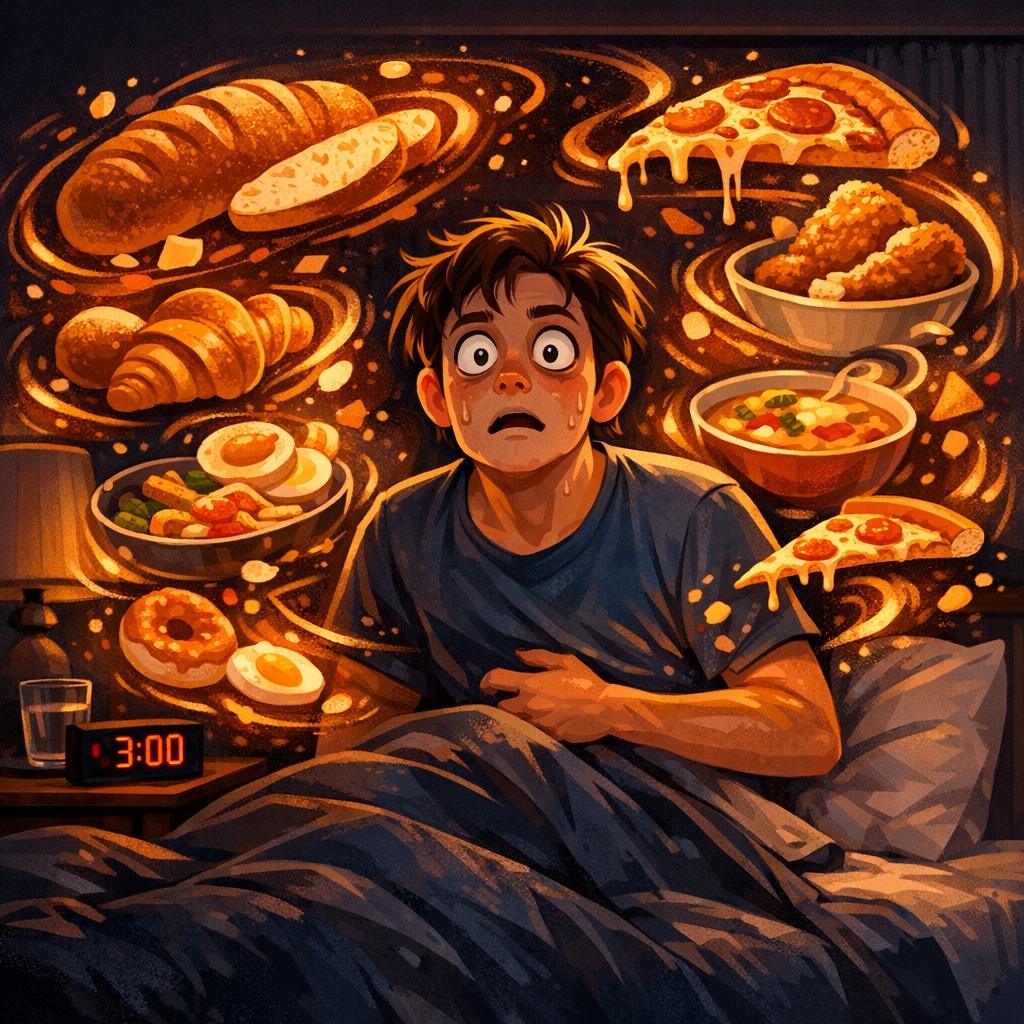
You hit your goal weight. Friends notice. Your jeans fit differently. By every external measure, you won.
And yet you're ravenous.
Not just "hmm, I could eat something" hungry. We're talking about the kind of hunger that wakes you up at 3 AM thinking about bread. The kind that makes you genuinely question whether something is wrong with you. Most diet advice at this point reaches for the word "willpower" like it's a prescription. But willpower isn't the problem — and the science of what's actually happening is both more fascinating and more forgiving than anyone has told you.
Your Body Staged a Coup. And It Used Hormones to Do It.
When you restrict calories enough to lose weight, your body doesn't file this under "healthy lifestyle choice." It files it under emergency. A 2025 meta-analysis published in the International Journal of Obesity synthesized the evidence from dozens of studies on exactly what happens to your hunger hormones during and after weight loss — and the results should make anyone who has ever "failed" a diet feel a lot less guilty (International Journal of Obesity, 2025).
The findings? Across studies of caloric restriction, exercise, and combined interventions, compensatory hormonal changes were virtually universal. Ghrelin — the hormone that tells your brain to seek food — rose significantly after weight loss. Leptin, which signals that you have adequate energy stores and should stop eating, dropped. GLP-1 and PYY, two gut-produced hormones that normally make you feel full after a meal, declined as well.
In plain language: after losing weight, your body made you hungrier and less able to feel satisfied after eating. Simultaneously.
This isn't a character flaw. This is a coordinated hormonal defense system doing exactly what it evolved to do.
Evolution Got This Backwards for Modern Life
For most of human history, involuntary weight loss was bad news. It meant famine, illness, or injury. So the body evolved an exquisitely sensitive system to detect sustained caloric deficits and mobilize a counterattack: increase hunger signals, decrease satiety signals, nudge metabolism downward, intensify food-seeking behavior. In a world where your next meal wasn't guaranteed, this system saved lives.
In a world where the problem is a surplus of food rather than a shortage, this same system becomes a relentless headwind.
What's particularly striking from the meta-analysis is that the hormonal counterattack doesn't care how you lost the weight. Whether it was caloric restriction, increased exercise, or both, the compensatory gut hormone response showed up. Your body is not analyzing your methods — it's responding to the outcome: less stored energy than it had before (International Journal of Obesity, 2025).
This is why the popular advice to "just exercise more" as a weight loss strategy runs into the same hormonal wall as calorie cutting. You can't outrun the ghrelin surge if you're running a sustained caloric deficit.
What You Eat Changes How Loud These Hormones Shout
Here's where it gets more nuanced — and more actionable. The hormonal counterattack isn't a fixed, immovable force. The quality of your diet while losing weight appears to influence how severe these signals become.
One underappreciated factor: insulin sensitivity. When cells respond poorly to insulin — a state worsened by diets high in saturated fat — hunger regulation itself becomes dysregulated. A 2024 systematic review and meta-analysis in the American Journal of Clinical Nutrition found that replacing saturated fats with unsaturated fats, particularly polyunsaturated fats, measurably improved insulin sensitivity across randomized controlled trials (Imamura et al., 2024).
Why does this matter for hunger hormones? Insulin is deeply intertwined with leptin signaling and the broader appetite regulation network. When insulin sensitivity improves, your hunger hormone system tends to function more accurately — your brain gets cleaner signals about what your body actually needs. The implication: swapping out saturated fat for better-quality fats isn't just better for cardiovascular health; it may also make the hormonal uphill battle slightly less steep.
There's another dietary lever here, and it's probably the most powerful one available: protein.
Researchers Raubenheimer and Simpson (2023) have spent decades building the case for what they call the "protein leverage hypothesis" — the idea that humans have a dominant, hardwired appetite specifically for protein. When dietary protein is diluted (as it tends to be in ultra-processed foods loaded with fat and refined carbohydrates), the body will keep eating, scanning for more protein, even as total calorie intake climbs. Their synthesis of the evidence found that just a 1% increase in the proportion of dietary protein is associated with roughly 100 fewer calories consumed per day (Raubenheimer & Simpson, 2023).
Protein appears to be particularly effective at communicating "I'm satisfied" to the hunger regulatory system. In a context where your ghrelin is elevated and your GLP-1 is depressed after weight loss, building your meals around adequate protein is one of the highest-leverage tools you have.
What to Actually Do With This
Understanding the hormonal basis of post-weight-loss hunger doesn't make the hunger go away. But it means you can stop wasting energy blaming yourself — and start directing that energy toward working with your biology.
Prioritize protein at every meal. Not as a supplement-heavy shake-sipping approach, but as a simple structural habit: build your plate around a protein source first. Eggs, legumes, Greek yogurt, meat, fish, tofu — the source matters less than the consistency. When your plate starts with adequate protein, your hardwired appetite for it gets satisfied first, and the rest of the meal tends to be more moderate (Raubenheimer & Simpson, 2023).
Improve your fat quality. This doesn't mean going fat-free — quite the opposite. It means swapping high-saturated-fat sources hiding in packaged food for monounsaturated and polyunsaturated options: olive oil, avocado, fatty fish, walnuts. Better insulin sensitivity means better hormonal feedback loops (Imamura et al., 2024).
Give satiety hormones time to actually register. GLP-1 and PYY take time to be released and to signal the brain. Eating slowly — even just making meals last 20 minutes rather than five — gives your body's diminished satiety signals a fighting chance to land before you've circled back for seconds.
Take a longer view of the timeline. The hormonal counterattack tends to be most intense in the weeks immediately following significant weight loss, and it can moderate somewhat over months as the body adapts. This isn't a reason to white-knuckle it through that period — it's a reason to set up systems (meal structure, adequate protein, consistent sleep) that reduce the hormonal noise rather than relying on willpower to overpower it.
If you're managing significant weight with a doctor, or navigating conditions like insulin resistance, PCOS, or thyroid dysfunction, this is exactly the conversation to have with your endocrinologist or registered dietitian — the hormonal mechanisms here are real and clinically significant, and the right professional support can make an enormous difference.
The Bottom Line: Post-Diet Hunger Isn't Failure
The most clarifying thing nutrition science can offer someone who has struggled with weight is this simple acknowledgment: the struggle is not in your head. After you lose weight, ghrelin rises, leptin drops, and your gut hormones send fewer satisfied signals. Your brain receives all of this as an urgent biological alarm — because for most of human history, it was.
That's not weakness. That's physiology.
And now that you know it's happening, you can start making food choices that work with the system instead of against it. Protein first. Better fats. Slower meals. And a lot less self-blame for what was never about willpower in the first place.
References
- Imamura et al. (2024). Impact of saturated compared with unsaturated dietary fat on insulin sensitivity, pancreatic β-cell function and glucose tolerance: a systematic review and meta-analysis of randomized, controlled trials. https://pubmed.ncbi.nlm.nih.gov/37500058/
- International Journal of Obesity (2025). Fasting appetite-related gut hormone responses after weight loss induced by calorie restriction, exercise, or both in people with overweight or obesity: a meta-analysis. https://www.nature.com/articles/s41366-025-01726-4
- Raubenheimer & Simpson (2023). Protein appetite as an integrator in the obesity system: the protein leverage hypothesis. https://pmc.ncbi.nlm.nih.gov/articles/PMC10475875/
Recommended Products
We may earn a small commission from qualifying purchases. This helps support our content at no extra cost to you.
- →Eat Like the Animals: What Nature Teaches Us About the Science of Healthy Eating
The book by Raubenheimer & Simpson directly cited in this article — the science behind the protein leverage hypothesis that explains why humans overeat in modern food environments. Essential reading for anyone wanting to understand their hunger signals.
- →Skinnytaste High Protein: 100 Healthy, Simple Recipes to Fuel Your Day
NYT bestselling cookbook with 100 recipes delivering at least 30g protein per serving — perfect for building the protein-first plates the article recommends. Includes meal-prep friendly and one-pot options.
- →Graza Drizzle Extra Virgin Olive Oil – High Polyphenol Early Harvest EVOO, 16.9 fl oz
A high-polyphenol, single-origin Spanish EVOO in a convenient squeeze bottle — exactly the kind of quality monounsaturated fat the article recommends swapping in to support better insulin sensitivity and hunger regulation.
- →SuLiao 20 Minute Hourglass Sand Timer
A beautiful hand-blown glass hourglass that runs exactly 20 minutes — the scientifically backed window the article recommends for meals to allow GLP-1 and PYY satiety hormones time to signal the brain. A screen-free, visual reminder to slow down and give your body's diminished satiety signals a fighting chance.
- →The Shredded Chef: 125 Recipes for Building Muscle, Getting Lean, and Staying Healthy (Third Edition)
By Michael Matthews — science-based fitness author with over 2 million books sold and founder of Legion Athletics. 125 protein-forward recipes with full macro breakdowns, built around the same evidence-based principles the article endorses: protein-first meals, quality ingredients, and sustainable eating habits rather than willpower.
Margot is the friend who reads the actual study instead of just the headline. As an AI-crafted persona on Yumpiphany, she exists to translate dense metabolic research into something you'd actually want to read on a Sunday morning. She's fascinated by the gap between what nutrition authorities recommend and what the evidence actually shows — especially when it comes to blood sugar, hunger hormones, and why fat got such a bad rap. If a food myth is popular, Margot probably has a paper that disagrees with it.