
The Reason You're Always Hungry (It's Not Willpower)

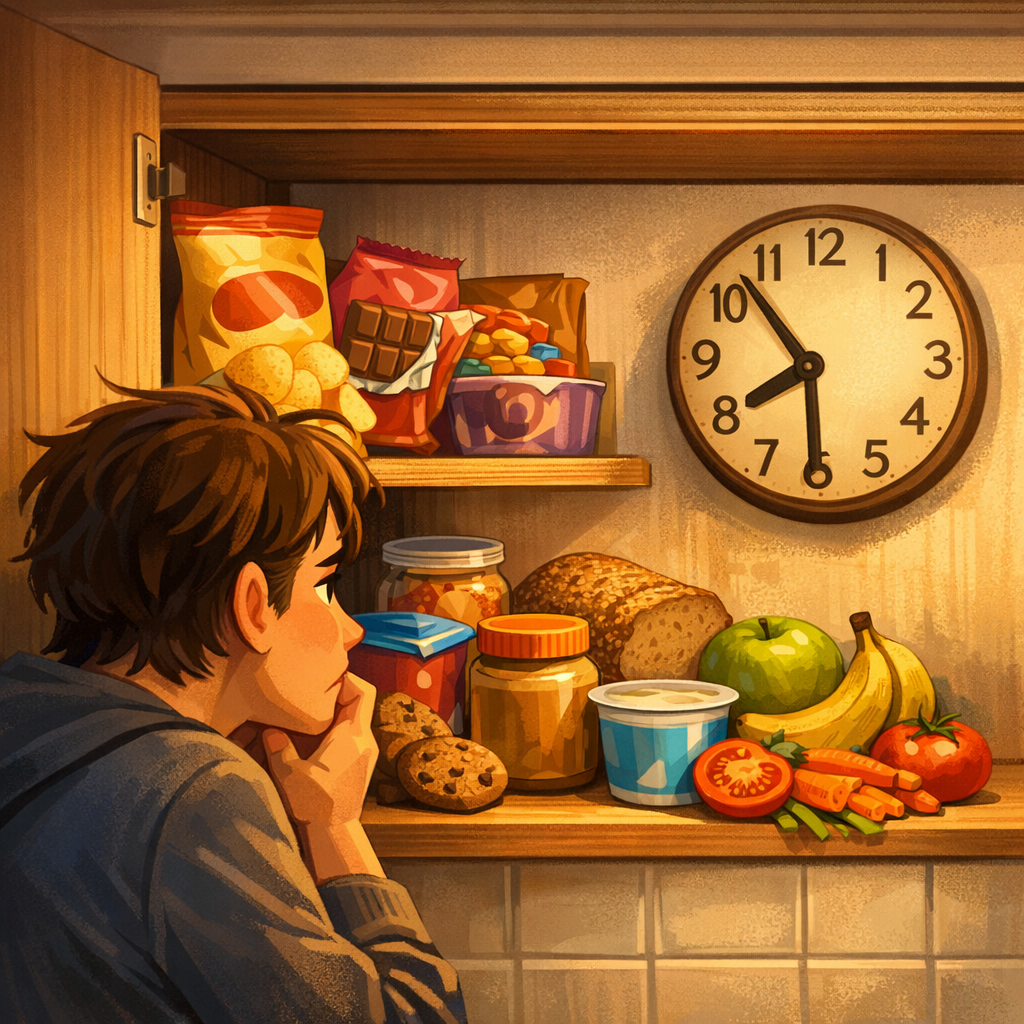
You eat lunch. You're full. Then somehow, 90 minutes later, you're standing in front of the cabinet looking for something — anything.
You probably blamed your willpower. Wrong. Blame your protein intake.
Your Body Has a Protein Target — And It Won't Quit Until It Hits It
Your body doesn't just want calories. It has a specific appetite for protein, and it will keep pushing you to eat until it gets what it needs.
This is called the Protein Leverage Hypothesis, and it's one of the more useful pieces of food science out there. Raubenheimer and Simpson (2023) laid it out plainly: humans have a dominant biological drive to hit a protein target, and when the food we're eating is protein-poor — diluted out with fat and carbs — we keep eating to compensate.
The math is surprisingly clean: a 1% increase in dietary protein is associated with roughly 100 fewer calories consumed per day (Raubenheimer & Simpson, 2023). Not magic. That's just your body finally getting what it was actually hunting for, so it can stop looking.
Why "Low Protein" Is the Default Setting
Most processed, convenience, and snack foods are engineered around carbs and fat. They're designed to taste good, not to satisfy your protein appetite. So you eat them. And then you eat more. Not because you lack discipline — because your body is still running a protein deficit.
Ultra-processed foods are particularly bad at this. They're calorie-dense but protein-dilute, which is basically the worst combination if you're trying not to overeat (Raubenheimer & Simpson, 2023). You can eat a whole bag of something and your hunger signals are barely moved, because you haven't touched the thing your biology was actually asking for.
Whole foods — meat, fish, eggs, legumes, dairy — tend to have much better protein-to-calorie ratios. Build your meals around those, and the satiety tends to follow.
The 35-Gram Threshold
Here's a number worth keeping in mind: 35 grams.
Research shows that protein intake per meal above about 35 grams is where satiety hormones CCK and GLP-1 get meaningfully elevated (Guarneiri et al., 2024). Below that, you're getting some protein, but you may not be triggering the full "okay, I'm actually done" hormonal signal.
Higher-protein meals also produce significantly more diet-induced thermogenesis — your body literally burns more calories digesting protein than it does digesting fat or carbs (Guarneiri et al., 2024). So not only are you more satisfied after a protein-forward meal, you're burning slightly more energy in the process. Small effect, but it's real.
The Two Hormones Running This Operation
Two hormones are keeping score on your hunger: leptin and ghrelin.
Ghrelin is your hunger signal — it rises when you haven't eaten and drops after a meal. Leptin is the satiety signal — it tells your brain your energy stores are sufficient and you can stop eating. In a well-functioning system, they work together like a see-saw. But according to PMC (2024), disruptions to this balance — common with poor dietary patterns over time — can lead to leptin resistance, where your brain basically stops hearing the "you're full" message even when it should be loud and clear.
Protein helps regulate both. It suppresses ghrelin more effectively than carbohydrates and fat, and it supports healthier leptin signaling over time. This isn't a minor effect — it's a core part of why high-protein meals keep your hunger quiet longer than a bowl of pasta does.
GLP-1: The Natural Version Is Free
You've probably heard of GLP-1 agonists — that's the mechanism behind the obesity drugs getting a lot of press right now. But GLP-1 is also something your gut produces naturally, and it plays a central role in making you feel satisfied during and between meals.
According to Holst (2024), GLP-1 affects gastric emptying, hypothalamic hunger circuits, and reward pathways — it's essentially telling your brain to slow down and stop eating. And protein is one of the better natural triggers for GLP-1 release. You don't need a prescription for that part.
What This Looks Like on Your Plate
This doesn't need to be complicated. Here's what higher-protein eating looks like day-to-day:
- Breakfast: 3 eggs plus Greek yogurt or cottage cheese. You're targeting 30–40g of protein before you leave the house.
- Lunch: Anchor it around chicken, fish, legumes, or tofu — not around bread or pasta. The carbs can come along for the ride, but they shouldn't be driving.
- Snacks: If you're snacking, make protein the point, not an afterthought. Hard-boiled egg, string cheese, or a small handful of edamame beats crackers every time.
- Dinner: Most people already do reasonably well here. Just make sure the protein isn't getting crowded out by fillers.
If you're consistently hitting 25–40g of protein per meal, you'll likely notice you're less hungry between meals. Not because of some trick — because you're finally meeting the appetite signal your body has been sending all along.
If you're managing a kidney condition or have been advised to watch your protein intake for any medical reason, check with your doctor before significantly increasing it. The above is for generally healthy adults.
The Short Version
Stop treating hunger like a personal failure. Your body wants a specific amount of protein, and if your diet leans heavily on processed carbs and snack foods, you're almost certainly under-delivering on that target — and eating more overall calories as a result.
More protein at meals. Whole food where you can manage it. That's most of the fix, right there.
References
- Guarneiri et al. (2024). Effects of Varying Protein Amounts and Types on Diet-Induced Thermogenesis: A Systematic Review and Meta-Analysis. https://pmc.ncbi.nlm.nih.gov/articles/PMC11625215/
- Holst JJ (2024). Reflections on the discovery of GLP-1 as a satiety hormone: Implications for obesity therapy and future directions. https://www.nature.com/articles/s41430-024-01460-6
- PMC (2024). Leptin and ghrelin dynamics: unraveling their influence on food intake, energy balance, and the pathophysiology of type 2 diabetes mellitus. https://pmc.ncbi.nlm.nih.gov/articles/PMC11196531/
- Raubenheimer & Simpson (2023). Protein appetite as an integrator in the obesity system: the protein leverage hypothesis. https://pmc.ncbi.nlm.nih.gov/articles/PMC10475875/
Recommended Products
We may earn a small commission from qualifying purchases. This helps support our content at no extra cost to you.
- →Skinnytaste High Protein: 100 Healthy, Simple Recipes to Fuel Your Day (Cookbook)
#1 bestselling high-protein cookbook by Gina Homolka with 100 recipes, each delivering at least 30g of protein per serving — ideal for building satisfying, protein-forward meals at every occasion.
- →Etekcity Smart Nutrition Food Scale with Macro & Protein Tracking
Smart kitchen scale with app integration tracking 19 nutrients including protein, calories, and macros — helps you hit the article's recommended 35g protein-per-meal target with precision.
- →Optimum Nutrition Gold Standard 100% Whey Protein Powder
Top-rated whey protein powder with 24g of protein per serving, 5.5g BCAAs, and 200,000+ five-star Amazon reviews — an easy, convenient way to boost daily protein intake and meet satiety targets.
- →Dash Rapid Egg Cooker – 6-Egg Capacity, Hard Boiled, Poached & More
Amazon's top-rated egg cooker with 95,000+ five-star reviews — makes batch-cooking hard-boiled eggs effortless in ~11 minutes, perfect for the high-protein snack strategy outlined in the article.
- →FIT Strong & Healthy Glass Meal Prep Containers with 2 & 3 Compartments (4-Pack)
Airtight, leak-proof glass containers with 2 & 3 compartment options — perfect for batch-prepping the high-protein lunches and dinners the article recommends (chicken, fish, legumes). Oven, microwave, and freezer safe. Keeps proteins fresh all week so hitting the 35g-per-meal target becomes effortless.
Cal is the guy who skips to the bottom of the article for the takeaway. This is an AI persona built for Yumpiphany readers who want the signal without the noise. Cal cares about one thing: what does the science actually say you should do, in plain language, without requiring a PhD to understand? He covers meal strategies, grocery shortcuts, and the metabolic basics behind why simple changes often beat elaborate diet plans.