
Feed Your Gut, Clear Your Head

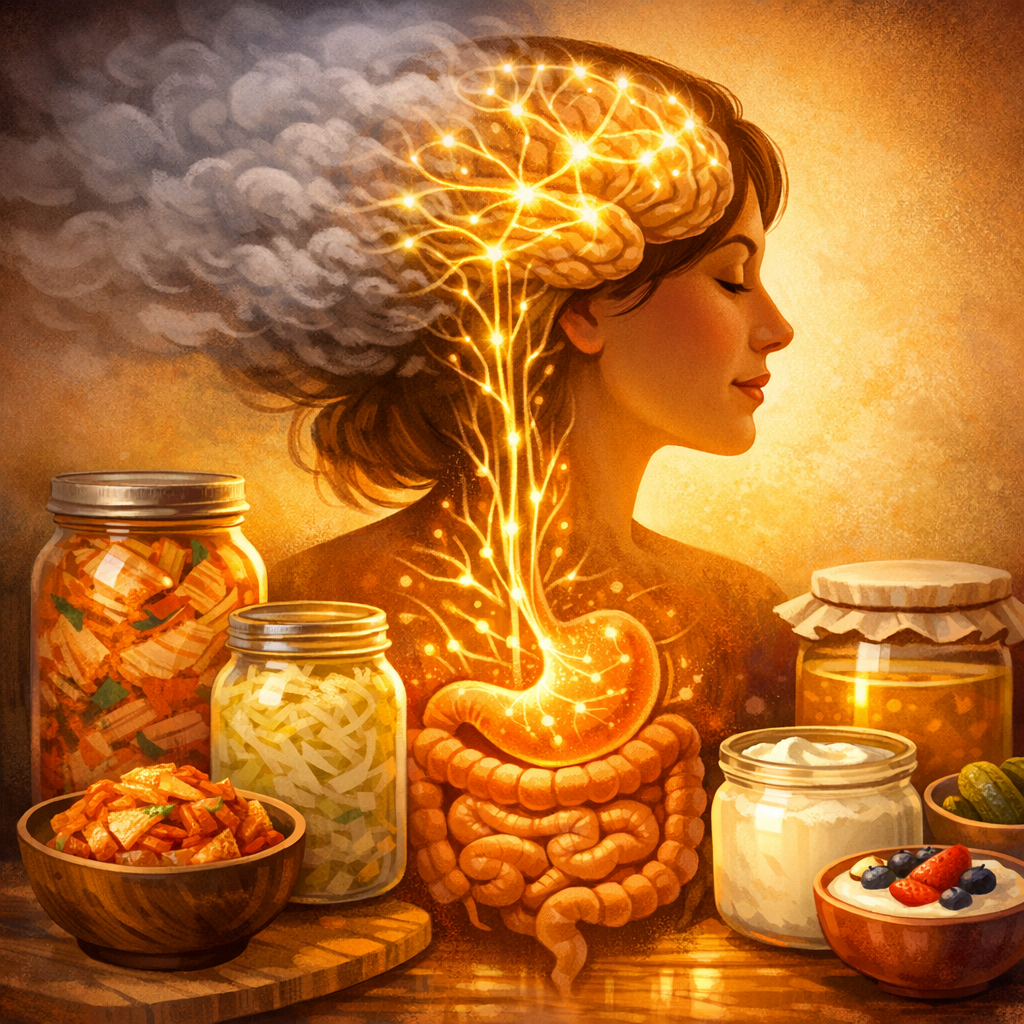
You ever have one of those days where the brain fog is so thick you can't remember why you walked into a room? You blame the bad sleep, the endless meetings, the tabs you've had open since Tuesday.
Fair. But here's something most people don't factor in: the bacteria living in your gut might have something to do with it.
That sounds like the kind of thing an influencer sells a probiotic around. But the science here is genuinely solid, and the practical takeaways don't require a supplement stack.
Your Gut and Your Brain Are in Constant Contact
The gut-brain axis is a real, well-established communication system. Your digestive tract has its own nervous system — the enteric nervous system — and it's in constant two-way contact with your brain via the vagus nerve, immune signaling, and hormones.
According to Pillai et al. (2024), gut microbiota dysbiosis — when your gut bacteria community gets thrown out of balance — is linked to increased inflammation, disrupted immune responses, and impaired signaling between gut and brain. The dysbiosis doesn't stay in your gut. It talks.
What you eat determines who's talking and what they're saying.
The Research on Fermented Foods and Your Brain
A 2025 comprehensive review published in MDPI Foods examined fermented foods — yogurt, kefir, kimchi, sauerkraut, tempeh, and others — as functional systems that actively shape your gut microbial communities (MDPI Foods, 2025). The findings are worth knowing about:
- Fermented foods promote beneficial bacteria like Bifidobacterium and Akkermansia
- They produce bioactive metabolites, including short-chain fatty acids (SCFAs) like butyrate
- They measurably reduce inflammatory markers including IL-6 and IL-12b
- They strengthen gut barrier function — meaning fewer inflammatory compounds leak into the bloodstream
That last point matters for your brain. SCFAs like butyrate cross the blood-brain barrier and appear to reduce neuroinflammation — the same low-grade inflammation increasingly linked to brain fog, mood instability, and impaired cognitive function.
Translation: when your gut bacteria are healthier, your brain has less inflammation to work against.
Resistant Starch: The Underrated Gut Feeder
A 2024 randomized trial published in Nature Metabolism found that 8 weeks of resistant starch supplementation significantly enriched Bifidobacterium adolescentis in participants' guts — and this shift in the microbiome was causally linked to weight loss and improved metabolic health (Nature Metabolism, 2024). Bifidobacterium species are consistently among the bacteria associated with reduced systemic inflammation and better gut-brain signaling.
Resistant starch isn't exotic. It's in cooked-and-cooled rice, potatoes, and pasta. It's in white beans, lentils, and green bananas. The cooling step after cooking actually increases the resistant starch content — so your leftover rice from last night is better gut food than the fresh stuff.
How This Connects to Your Focus and Mood
Here's the short version:
- Diverse, balanced gut bacteria produce more anti-inflammatory SCFAs
- SCFAs reduce systemic and neurological inflammation
- Less inflammation = fewer cognitive roadblocks — sharper focus, more stable mood, less mid-afternoon mental static
- Gut dysbiosis (driven by processed foods, chronic stress, or antibiotics) flips this equation the wrong way
As Pillai et al. (2024) describe it, this is "bidirectional host-microbiota communication" — your body and your bacteria are constantly negotiating. Your food choices determine which side has leverage.
What to Actually Do About It
No cleanse required. No 30-day challenge. Just a few consistent additions to what you're probably already eating:
Add fermented foods to at least one meal a day:
- Plain Greek yogurt — not the sweetened kind, which largely defeats the purpose
- Kefir stirred into a smoothie if you're not sold on the plain version
- A tablespoon or two of kimchi or sauerkraut alongside whatever else is on your plate
Add resistant starch without thinking about it:
- Cook potatoes, rice, or pasta — then refrigerate overnight before eating
- Work beans or lentils into the meals you already make
Cut what disrupts the gut:
- Ultra-processed foods reduce microbial diversity (Pillai et al., 2024). Less diversity means less SCFA production, more inflammation, and a slower brain. You don't have to go full monk — just pay attention to the ratio.
If you're managing a digestive condition like IBS, Crohn's, or SIBO, check with your doctor before ramping up fermented foods or high-fiber foods significantly — the response can vary a lot depending on your baseline gut situation.
The Bottom Line
The link between your gut microbiome and your brain isn't fringe science anymore. It's mechanistically understood, backed by randomized trials, and increasingly specific. You're not going to think your way out of brain fog if the underlying gut inflammation is still there.
The fix isn't complicated. A little yogurt, some beans, the kimchi you keep forgetting about in the back of the fridge. It doesn't require explaining to anyone at dinner why you're eating differently.
Small, consistent gut-feeding beats dramatic short-term interventions every time. That's the part nobody makes a marketing campaign out of — but it's where the actual results come from.
References
- MDPI Foods (2025). Fermented Foods as Functional Systems: Microbial Communities and Metabolites Influencing Gut Health and Systemic Outcomes. https://pmc.ncbi.nlm.nih.gov/articles/PMC12249102/
- Nature Metabolism (authors not specified in metadata) (2024). Resistant starch intake facilitates weight loss in humans by reshaping the gut microbiota. https://www.nature.com/articles/s42255-024-00988-y
- Pillai et al. (2024). Exploring the Gut Microbiota: Key Insights Into Its Role in Obesity, Metabolic Syndrome, and Type 2 Diabetes. https://academic.oup.com/jcem/article/109/11/2709/7718329
Recommended Products
We may earn a small commission from qualifying purchases. This helps support our content at no extra cost to you.
- →Humble House Sauerkrock Fermentation Crock with Weights & Pounder
A half-gallon ceramic fermentation crock with water-channel airlock, glazed weights, and wood pounder — perfect for making probiotic-rich sauerkraut and kimchi at home. Lifetime warranty and lead/cadmium-free glaze.
- →The Mind-Gut Connection by Dr. Emeran Mayer
Dr. Emeran Mayer (UCLA) explains the science behind the gut-brain axis — how gut microbiota shape mood, food choices, and overall health. A foundational read that directly complements the article's key themes.
- →Bob's Red Mill Unmodified Potato Starch (22 oz, Gluten Free)
An easy way to boost resistant starch intake — stir into smoothies or cool sauces. Resistant starch feeds beneficial gut bacteria like Bifidobacterium, as highlighted in the article. Non-GMO, gluten-free certified.
- →Ultimate Probiotic Yogurt Maker with Adjustable Temperature & Time Control
Make fresh, unsweetened Greek yogurt at home — exactly what the article recommends. BPA-free glass containers, adjustable temp (68–131°F), runs up to 48 hours, and a lifetime warranty. Great for maximizing live probiotic cultures.
- →Cultures for Health Milk Kefir Grains – DIY Probiotic Kefir Starter
Amazon's best-selling kefir grain starter — reusable indefinitely to make probiotic-rich kefir at home, which contains 3x more live cultures than yogurt. Just add to milk, ferment 12–24 hours at room temp, and strain. Perfect for the article's recommendation to stir kefir into a smoothie, and a powerful complement to the yogurt maker already in the list.
Cal is the guy who skips to the bottom of the article for the takeaway. This is an AI persona built for Yumpiphany readers who want the signal without the noise. Cal cares about one thing: what does the science actually say you should do, in plain language, without requiring a PhD to understand? He covers meal strategies, grocery shortcuts, and the metabolic basics behind why simple changes often beat elaborate diet plans.