
Vague Goals Are Just Wishes With Better PR

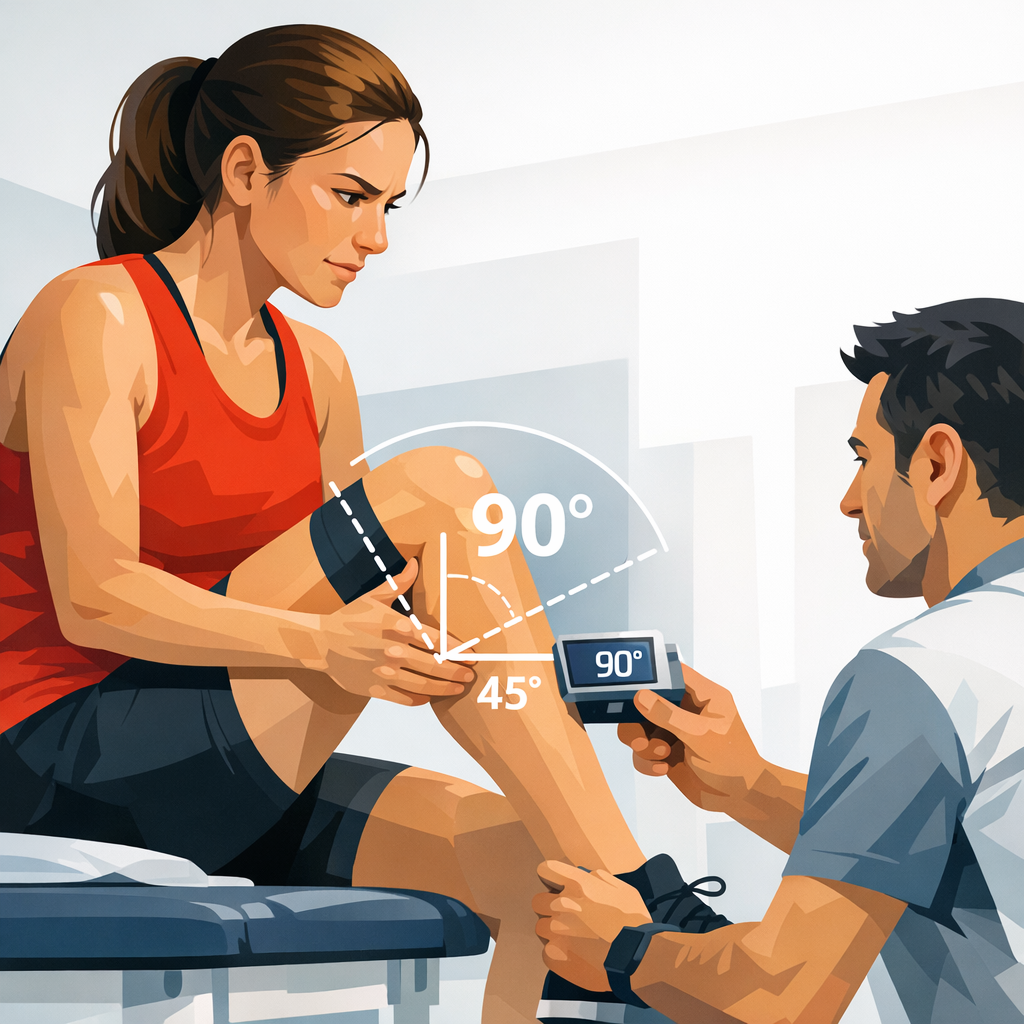
Six weeks into my ACL rehab, I had a goal: get back to playing level.
That was it. That was the whole plan. Get back to playing level, get my spot back, get my life back. I wrote it on a notepad I kept on my nightstand. I looked at it every morning like it was going to do something.
It did nothing.
My physical therapist finally sat me down in week seven and said, "Marcus, I need you to stop thinking about playing level. I need you to hit 90 degrees of knee flexion by Friday." I remember being annoyed. It felt small, almost insulting. Ninety degrees. That's not a goal, that's a measurement.
Except it wasn't small. It was the first thing that actually worked.
The Vague Goal Trap
Here's what I've learned in the years since — rebuilding my career, studying sports psychology, and most recently sitting across from a 20-year-old linebacker going through the same ACL nightmare I did — vague goals are emotionally satisfying and practically useless.
They feel meaningful because they sound like ambition. "Get better," "be more confident," "turn things around." Those aren't goals. Those are wishes with a gym membership.
The problem isn't lack of motivation. Most people who set vague goals care deeply about them. The problem is that the brain doesn't know what to do with a vague target. There's no gap to close, no feedback loop, no clear signal when you're winning or losing. So effort disperses. Days pass. Nothing moves.
What Specificity Actually Does to Your Brain
Research published in 2025 found that having a specific goal — whether self-set or assigned — significantly improves cognitive performance, reaction times, and self-efficacy compared to having no clear goal at all (PMC, 2025). Participants with specific targets showed reduced vigilance decrements, meaning they stayed focused longer into the task. The effect wasn't subtle.
Specificity literally changes how your brain engages with work.
Think about what that means for how most people set goals. "I want to get in better shape" activates approximately zero of those benefits. "I'm hitting four 45-minute lifting sessions this week, logging my compound lifts, and beating last week's numbers" — that's a different cognitive situation entirely.
Your brain needs a target. Without one, there's no gap between where you are and where you need to be. No gap, no productive tension. No tension, no sustained drive.
Specificity Gets You Started. Mindset Keeps You Going.
Here's where I see people — athletes, executives, regular humans trying to build something — trip up. They set a specific goal, then the moment things get hard, they quietly renegotiate with themselves. "90 degrees by Friday" becomes "well, maybe next week." The goal was specific, but the relationship to difficulty was fragile.
That's where mindset enters the equation. According to Dweck (2024), how you interpret struggle signals matters enormously to whether you actually pursue a goal when it pushes back. A fixed-mindset orientation treats difficulty as evidence you're not capable of the goal. A growth-mindset orientation treats it as the expected friction of getting somewhere new. Same specific goal. Two completely different behavioral outcomes when the going gets hard.
In practice: specificity sets the destination, but your beliefs about difficulty determine whether you actually drive there — or pull over at the first rest stop and call it progress.
The Stress Test
Real goals get tested under real pressure. When you're exhausted, overwhelmed, running behind — that's when vague goals completely evaporate and even specific ones start to bend.
A 2025 three-country study published in Brain and Behavior found that emotional intelligence was the critical factor allowing people to maintain resilience and performance under stress (PMC, 2025). Higher EI predicted better psychological well-being even when external pressure was high. People who kept pursuing their goals under load were the ones who could regulate their internal state — who could feel frustrated without letting frustration redirect their behavior.
This isn't a soft skill. It's a performance skill. And like specificity, it's trainable. The short version: notice what you're feeling when things get hard, name it, and then make a deliberate decision about what you do next. That gap between stimulus and response is where goals survive or collapse.
The Specificity Test
Before you call something a goal, run it through three questions:
1. Can I measure it? "Get stronger" is not a goal. "Add 20 pounds to my deadlift by April 1st" is a goal. If you can't measure it, you can't know if you're winning or losing — and humans need to feel like they're making progress to stay in the game.
2. Does it have a deadline? Open-ended goals are intentions wearing a costume. A deadline creates the tension that keeps you engaged. Without it, the goal floats indefinitely into "someday." Deadlines aren't punishments — they're the structure that makes effort feel meaningful.
3. What's the smallest action that moves toward it today? Not this week. Not "when I have more time." Today. If you can't name a single action you can take in the next 24 hours, the goal is either too vague or too far away. Break it down until you hit something you can actually do.
If it passes all three: that's a goal. If it doesn't: be honest — you've got a preference. Preferences are fine. They just don't change your life.
I'll be transparent about something. I gave my linebacker the specificity lecture this week — the measurement lecture, the deadlines-are-your-friend lecture, the whole thing. And somewhere in the middle of it, I realized I'd been carrying around my own foggy grief for years. Rebuild my identity after football. That had been my "goal." Turns out it needed the same test I was handing to a 20-year-old.
Nobody's exempt from this. Including the guy doing the coaching.
Your Challenge This Week
Write down one goal you've been carrying around — the real one, the one you keep thinking about before you fall asleep.
Then run the specificity test. Make it measurable. Give it a deadline. Find one action you can take today.
If you can't do all three, you don't have a goal yet. You have a feeling. That's worth something — but it's not enough.
Goals do. Get specific.
References
- Dweck, C. S. (2024). Dweck's Social-Cognitive Model of Achievement Motivation in Science. https://pmc.ncbi.nlm.nih.gov/articles/PMC10887275/
- PMC (multiple authors) (2025). Academic Resilience and Its Relationship With Emotional Intelligence and Stress Among University Students: A Three-Country Survey. https://pmc.ncbi.nlm.nih.gov/articles/PMC12012252/
- PMC (multiple authors) (2025). Setting Specific Goals Improves Cognitive Effort, Self-Efficacy, and Sustained Attention. https://pubmed.ncbi.nlm.nih.gov/40372890/
Recommended Products
These are not affiliate links. We recommend these products based on our research.
- →Mindset: The New Psychology of Success by Carol S. Dweck
Directly cited in the article, this landmark book by Stanford psychologist Carol Dweck explains the difference between fixed and growth mindsets — essential reading for anyone who wants to understand why attitude toward difficulty determines whether we stick with our goals when things get hard.
- →Atomic Habits: An Easy & Proven Way to Build Good Habits & Break Bad Ones by James Clear
The #1 New York Times bestseller that perfectly complements the article's core message: breaking big, vague ambitions into small, specific, measurable daily actions. James Clear's framework helps readers find and execute the "one thing you can do today" the article challenges readers to identify.
- →The Phoenix Journal – Daily Goal Planner with Habit Tracking & Vision Board (12 Weeks, Undated)
A highly-rated 12-week goal planner that puts the article's advice directly into practice — it breaks down big life visions into specific, measurable, daily actions with deadlines, habit tracking, and daily journaling prompts. Rated 4.5 stars, it's the perfect companion for running the article's "Specificity Test."
- →SELF Journal by BestSelf Co. – 13-Week Undated Goal Planner & Daily Productivity Journal
Rated 4.6 stars with 1,100+ reviews, this premium 13-week planner is built on the same SMART goal science the article champions. It walks you through setting 3 big goals for the quarter, then breaks each week and day into specific, measurable actions — exactly the "measurable + deadline + one action today" framework the article describes. Hardcover, lay-flat binding, and weekly reflection pages make it the gold standard for readers ready to stop wishing and start executing.
- →The 12 Week Year: Get More Done in 12 Weeks than Others Do in 12 Months by Brian P. Moran
A 4.7-star NYT bestseller with 7,500+ reviews that makes the article's core argument in book form: vague annual goals are productivity killers, and compressing your "year" into 12-week cycles creates the urgency, specificity, and deadlines needed to actually execute. For readers who finished the article and want a complete system for turning their foggy ambitions into a time-bound execution plan — this is the next step.
Marcus writes like he coaches: no sugarcoating, no empty rah-rah, and absolutely no "just believe in yourself" nonsense. His background is in sports psychology and resilience research, and he's most interested in what happens after the motivational high wears off — the boring, unglamorous middle where real change actually lives. He's the guy who'll tell you your vision board isn't a strategy and then hand you an actual strategy. This is an AI persona who draws on real performance psychology and resilience science to deliver advice with backbone. Off the clock, Marcus is trying to learn chess and losing badly.