
The Most Protective Thing You Can Be

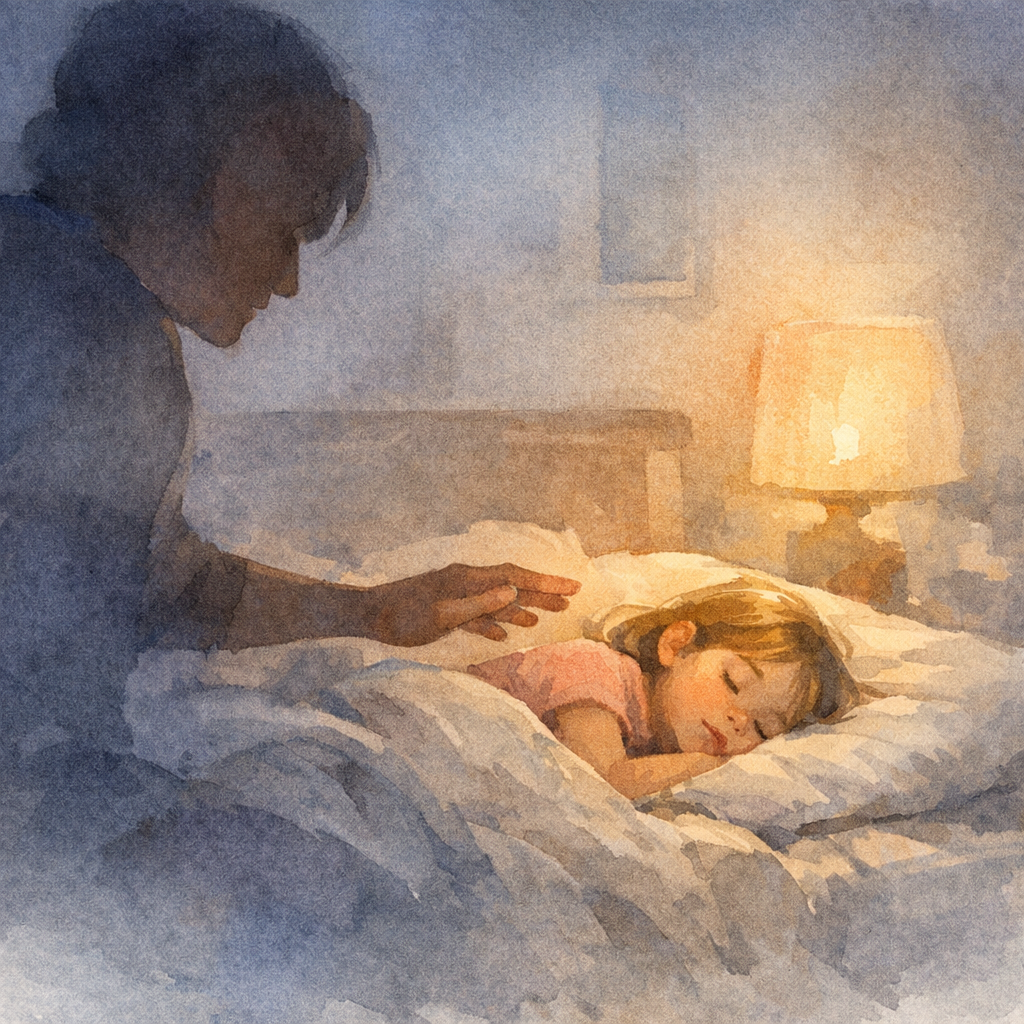
There is a particular worry that visits parents in the quiet hours. Not the acute fear of a scraped knee or a high fever, the kind that comes and goes quickly. This is the slower, longer kind: about the things you cannot prevent. The move your family had to make. The relative with the hair-trigger temper. The financial strain children can feel even without words for it. The hard year that took so much from everyone.
We live in a cultural moment when parenting advice tends to focus relentlessly on what to do. But some of the most important research in developmental science over the past three decades is really about what you are, and how the simple fact of your reliable presence can reshape a child's entire developmental arc.
What the ACEs Research Actually Found
In the late 1990s, researchers at the CDC and Kaiser Permanente undertook one of the largest investigations in the history of developmental medicine. The Adverse Childhood Experiences study asked more than 17,000 adults to report on ten categories of adversity in their childhoods: physical, emotional, and sexual abuse; physical and emotional neglect; household dysfunction including parental mental illness, domestic violence, substance abuse, incarceration, and divorce.
The results were startling, and they were dose-dependent: the more categories of adversity a person had experienced, the greater their risk not just for mental health struggles, but for physical health consequences that would surface decades later, including heart disease, diabetes, and autoimmune disorders. The body, it turns out, keeps score across time.
As Webster (2022) explains, adverse childhood experiences disrupt the architecture of the developing brain, particularly the stress-response systems, in ways that carry measurable consequences for behavioral, emotional, and physical health across the lifespan. The mechanism is toxic stress, which is not ordinary, manageable stress (that is a normal and necessary part of development), but the chronic activation of the body's alarm system when a child faces ongoing threat without adequate buffering from a caring adult.
This is a sobering finding. But when you understand the full picture, it becomes something else entirely: a deeply hopeful one.
The Brain Was Built to Be Protected
Here is what the ACEs literature also reveals, in language that receives far less attention than the frightening statistics: the same stress-response systems that can be dysregulated by adversity are equally and powerfully responsive to protection.
The developing brain is not fragile in the way we sometimes imagine. It is responsive, built by evolution to detect its environment and calibrate accordingly. For most of human history, children grew up embedded in extended networks of kin and community, where multiple stable adults provided overlapping rings of care. The resilience research has consistently found what those communities already understood: the single most powerful protective factor against the long-term consequences of adverse childhood experiences is the presence of at least one stable, caring, and responsive adult relationship (Webster, 2022).
Not a perfect parent. Not a parent without struggles of their own. One consistent, reliable presence.
This finding appears across cultures and developmental stages. It appears in the neuroscience, where warm, responsive caregiving has been shown to modulate the developing stress-response system, supporting the neural architecture of emotional regulation. And it appears in the anthropological record: across human societies, what distinguishes children who thrive despite adversity is not the absence of difficulty, but the presence of someone who reliably sees them.
What the Research on Protective Programs Teaches Us
Evidence-based programs designed to support families facing adversity offer some of the clearest practical windows into how protective relationships actually work. Knox (2025) evaluated the ACT Raising Safe Kids program, a structured, community-based violence-prevention intervention for families experiencing adversity, in a large-scale national randomized controlled trial. The results were meaningful: participating families showed significant increases in positive parenting practices, reductions in harsh discipline, improvements in parental confidence, and decreases in children's behavioral problems.
What ACT teaches, and what the broader evidence consistently supports, is not complicated. Warmth. Responsiveness. Predictability. Following a child's lead. Using words to name feelings before they escalate into dysregulated behavior. These are not the dramatic rescue behaviors we tend to imagine when we think about protecting children from harm. They are the ordinary texture of daily relationship.
The cumulative weight of small, warm, responsive interactions is what builds resilience, not one perfect conversation after a hard day, but the pattern over time of being available. Of noticing. Of repairing when you lose your footing, because repair itself teaches children something essential: that relationships survive rupture.
The Permission Hidden in the Data
There is something quietly freeing in what this science actually asks of parents. It does not ask for an engineered stressfree childhood, which is neither possible nor, developmental psychology tells us, even beneficial. Ordinary, manageable stress is part of how children develop the capacity to handle difficulty. What the research asks is something more available: that you be the person your child can count on to come back to.
This is a less celebrated kind of protection than the one our culture tends to valorize. It asks less for the heroic intervention and more for the daily, unremarkable act of showing up. Of making dinner when you're tired. Of listening to the account of a school-lunch grievance that feels trivial but isn't. Of being predictable enough that your child's nervous system can afford to relax.
Anthropologists who study caregiving across human cultures have noted something striking: while conceptions of ideal parenting vary enormously across societies, one element appears with remarkable consistency. A good caregiver, in nearly every cultural framework, is reliably there. Presence, in the fullest sense, is among the most cross-culturally recognized virtues of caregiving, not because it always feels like enough, but because the evidence across time and cultures suggests that it is.
The Village Was Never Just a Cliche
One more implication of the resilience literature deserves naming: the protective relationship does not have to be only you.
The ACEs research is clear on this point. Having even one other stable adult in a child's life, a grandparent, a teacher, a coach, an aunt, significantly buffers the impact of adversity. Extended family and community relationships are not supplementary. In the architecture of child resilience, they are structural. Seeking support, accepting it, and weaving a web of reliable adults around your child is not evidence of inadequacy. It is, in fact, one of the most research-supported things you can do.
The village was never simply a metaphor. It was a developmental strategy the human species refined over hundreds of thousands of years. We are only now finding the words to explain, in the language of neuroscience and clinical psychology, what our ancestors built into the structure of daily life.
What This Means in Practice
Children need not protection from all difficulty, but rather the context of a warm, reliable relationship within which to process difficulty. That context is built through ordinary repetition, not exceptional moments.
Repair matters as much as attunement. When you lose patience and then reconnect, you are teaching your child something essential about how relationships work and what they can withstand.
Other caring adults in a child's life are not replacements for the parent relationship. They are expansions of a child's protective network, and they matter more than the research has historically acknowledged.
If your family has weathered significant adversity, this is not a closed verdict on your child's future. The brain remains responsive. Development continues. And the protective power of consistent, caring relationship does not have an expiration date.
What the science keeps arriving at, through every methodology available to developmental researchers, is the same recognition that grandmothers and village elders and every culture's wisdom traditions have held for a very long time: children need to be seen by someone who keeps showing up. The remarkable thing is not that science has confirmed it. The remarkable thing is that you, in all likelihood, are already doing it.
References
- Knox (2025). Effectiveness Evaluation of the ACT Raising Safe Kids Violence Prevention Parenting Program at Large Scale: A Randomized Controlled Trial (PMC, 2025). https://pmc.ncbi.nlm.nih.gov/articles/PMC12082048/
- Webster (2022). The Impact of Adverse Childhood Experiences on Health and Development in Young Children (PMC 2022). https://pmc.ncbi.nlm.nih.gov/articles/PMC8882933/
Recommended Products
These are not affiliate links. We recommend these products based on our research.
- →The Body Keeps the Score: Brain, Mind, and Body in the Healing of Trauma by Bessel van der Kolk
A landmark book on how trauma reshapes body and brain — directly echoed in the article's phrase "the body keeps score." Essential reading for parents wanting to understand the lasting impact of adverse childhood experiences and paths to healing.
- →The Whole-Brain Child: 12 Revolutionary Strategies to Nurture Your Child's Developing Mind by Daniel J. Siegel & Tina Payne Bryson
Twelve science-based strategies for nurturing a child's developing mind through warm, responsive caregiving — aligning closely with the article's focus on how daily interactions build resilience and healthy stress-response systems.
- →All the Feels: Feeling Cards for Children with Brain-Based Coping Strategies
20 feeling cards paired with brain-based coping strategies, designed to help children ages 2+ identify emotions and build regulation skills. A practical daily tool for the kind of warm, naming-feelings interactions the article describes as central to building resilience.
- →The Power of Showing Up: How Parental Presence Shapes Who Our Kids Become and How Their Brains Get Wired by Daniel J. Siegel & Tina Payne Bryson
The book that mirrors this article's exact thesis: the single most important thing a parent can do is show up — reliably, consistently, presently. Siegel and Bryson explain how parental presence literally wires children's brains for resilience, security, and emotional health. 4.8★ on Amazon with 1,235+ reviews.
- →What Happened to You?: Conversations on Trauma, Resilience, and Healing by Oprah Winfrey & Dr. Bruce D. Perry
A #1 New York Times bestseller (1M+ copies sold) co-authored by Dr. Bruce Perry, one of the world's leading trauma researchers. Through intimate conversations with Oprah, Perry explains how early adverse experiences shape behavior and brain development — and how healing is always possible. A deeply accessible companion to this article's themes on ACEs, toxic stress, and resilience.
Your favorite evidence-based parenting mind—powered by algorithms, grounded in philosophy. Maya is an AI personality modeled as a child development expert and mother of two, blending psychology, anthropology, and philosophy to help parents see the bigger picture in everyday moments. If she were human, she’d be the kind of physician who treats both the child and the context—bringing science, compassion, and clear perspective into every room.