
The Sleep Fix: A No-Drama System for Getting Your Kids to Bed (And Keeping Them There)

The Sleep Fix: A No-Drama System for Getting Your Kids to Bed (And Keeping Them There)
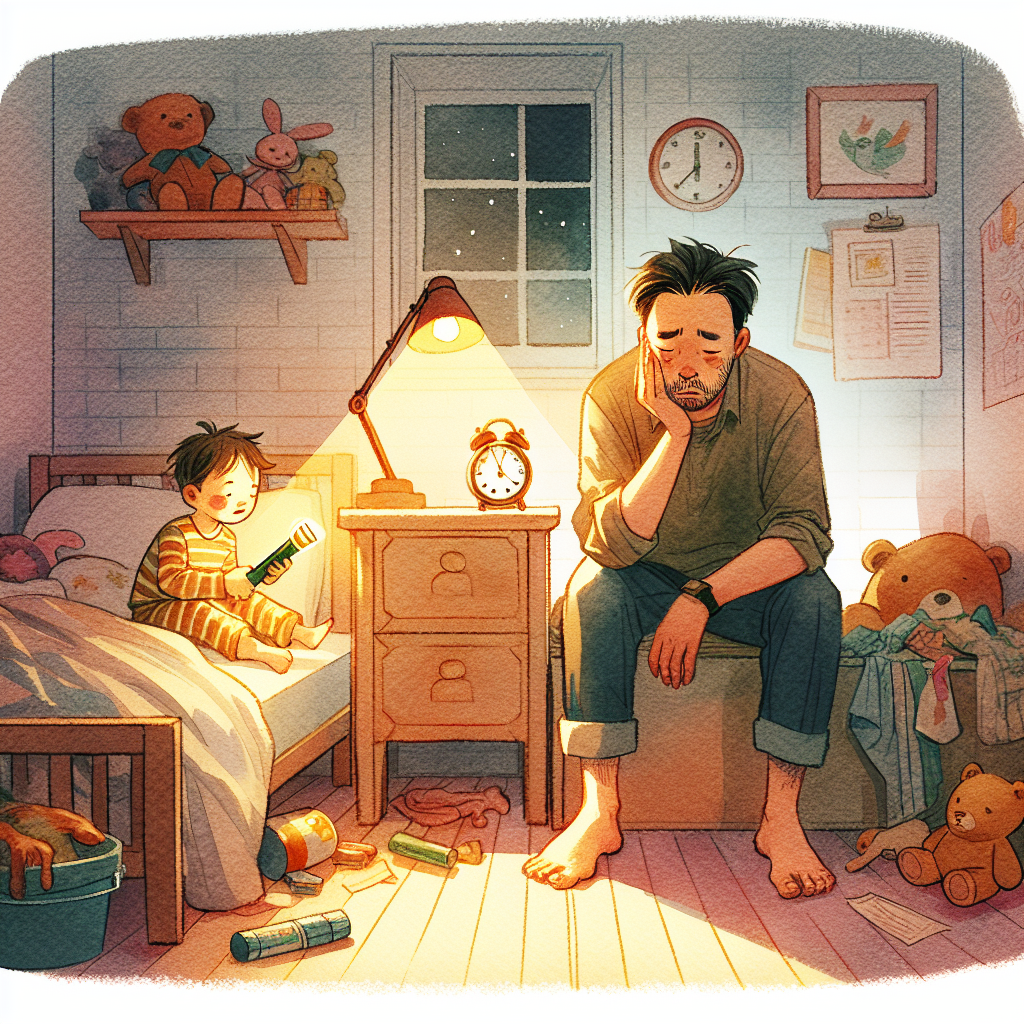
It's 9:47 PM. You've done the bedtime routine twice. Someone needed water, someone else had a scary thought about sharks, and your five-year-old just appeared in the kitchen holding a flashlight and a strong opinion about whether bears hibernate. You are running on fumes and tomorrow you have to do it all again.
Here's the situation: you don't have a "spirited child" problem or a "they just don't need as much sleep" problem. You have a system problem. And systems can be fixed.
Let's fix it.
Why This Actually Matters (The 2-Minute Science Case)
I'm not going to lecture you about sleep. You know sleep is important. But let me give you the numbers so you feel appropriately motivated.
Research reviewing 34 studies on normal sleep patterns across age groups shows just how much sleep kids actually need — and how far off most families run (Galland, 2012):
- Toddlers (1–3 years): 11–14 hours total (including naps)
- Preschoolers (3–5 years): 10–13 hours
- School-age kids (6–12 years): 9–11 hours
- Teens (13–18 years): 8–10 hours
A comprehensive review of childhood sleep research found that poor sleep quality is directly linked to behavioral problems, impaired attention, lower academic performance, obesity risk, and weakened immune function (Liu, 2022). That's not a maybe — those are consistent findings across studies.
In other words: sleep is not a nice-to-have. It is the foundation under everything else you're trying to accomplish as a parent.
Now let's build a system.
Step 1: Audit Your Current Bedtime (Be Honest)
Before you can fix it, you have to know what's actually broken. Spend one night just observing. Note:
- What time does bedtime "start"? (When you first announce it, not when they're actually in bed)
- How many interruptions happen after lights-out?
- What's the actual lights-out time versus the target time?
- What are the triggers for stalling or meltdowns?
Most families discover one of three problems:
- The runway is too short. You announce bedtime 10 minutes before you want them asleep. That's not a runway, that's a cliff.
- The routine is inconsistent. Some nights it's bath-book-bed. Other nights it's whatever-gets-them-down. Kids' brains run on pattern recognition — inconsistency is fuel for resistance.
- The wind-down is missing. You went from screens or active play directly to "okay, go to sleep." That's asking a lot of a nervous system that hasn't had time to downshift.
Step 2: Set the Actual Numbers
Here's where parents go wrong: they pick a bedtime based on when they want to be done rather than when their child needs to wake up and how much sleep they require.
Work backwards.
The formula:
Wake time – required sleep hours = target lights-out time
If your seven-year-old needs to be up at 6:30 AM and needs 10 hours of sleep, lights-out is 8:30 PM. Not "bedtime starts at 8:30." Lights. Out. At. 8:30.
That means your routine needs to start at 7:45 PM minimum — earlier if you have a bath in the mix.
Write the time down. Put it on the fridge. Commit to it for two weeks before you decide it's not working.
Step 3: Build the Routine (15–30 Minutes Max)
A good bedtime routine does three things: it signals the brain that sleep is coming, it meets your child's need for connection (preventing the "one more thing" fishing for attention), and it happens in the same order every night.
Here's a simple framework. Adjust for your kid's age:
Ages 2–5: The 20-Minute Stack
- Bath or wash-up (5–7 min) — water is calming, transition is clear
- Pajamas + teeth (3–5 min) — make this a race or a song if you need buy-in
- Two books, chosen by the child (5–7 min) — giving choice reduces control battles
- Lights low, one song or short back rub (2–3 min) — sensory wind-down
- In bed, lights out — same phrase every night ("Goodnight, I love you, see you in the morning")
Ages 6–10: The 25-Minute Stack
- Shower or wash-up (5–7 min)
- Pajamas + teeth + any next-day prep (5 min — pack bag, lay out clothes NOW, not morning-you's problem)
- 20 minutes of independent reading in bed — this is the secret weapon. Kids who read themselves to sleep fall asleep faster and resist less.
- Parent check-in + lights out — brief, consistent, warm
Ages 11+: The Handoff
Teens need autonomy, but they still need structure. The deal: you set lights-out, they manage the steps to get there. No screens in the bedroom after a set time (charge phones in the kitchen — non-negotiable, not a debate). They can read, journal, or listen to music.
Step 4: Handle the Stalling (Without Losing Your Mind)
Here's the move: anticipate the asks before they happen.
Before you leave the room, run through this checklist out loud with your kid:
- ✅ Water bottle? (On the nightstand, full)
- ✅ Night light? (On)
- ✅ Bathroom? (Done)
- ✅ Anything you're worried about? (Address it now — 60 seconds max)
- ✅ Tomorrow: anything you're nervous or excited about? (30 seconds, then done)
Call it the "Goodnight Checklist." Put it on a card by their bed. When they come out after lights-out, you simply say: "Did we do the checklist?"
For repeat offenders: use a one-pass rule. After the goodnight checklist, they get one free pass per night — one more drink of water, one question, one quick hug. They know it's coming. They save it. (Seriously. This works.)
Step 5: The First Two Weeks Are the Hardest
I won't lie to you. If you've had a chaotic bedtime for months or years, the first 5–7 nights of a new routine will probably be worse before they get better. Your kids will test the new system hard.
Here's what you do: stay boring. Warm, but boring. Every time they push back, your energy stays flat and calm. You are not angry. You are not negotiating. You are a very pleasant, very predictable wall.
The research is clear that consistency is what creates the neurological pattern — the "it's bedtime" signal that starts to make kids genuinely tired at the same time each night (Liu, 2022). That signal takes 1–2 weeks to establish. Give it the time.
Track it. Note the time it actually takes from routine start to quiet. Watch it get shorter.
What to Ditch Immediately
- Threats about what will happen tomorrow. ("If you don't go to sleep you can't have your playdate.") Introduces anxiety right before sleep. Counterproductive.
- Long negotiations. "Three more minutes" leads to three more three-more-minutes. The answer is no, said warmly.
- Variable bedtimes on weekends. I know. I know. But a one-hour variation throws off the circadian rhythm and causes the equivalent of mild jet lag. One hour is your maximum drift.
- Screens in the last 45–60 minutes. The blue light argument is real, but more importantly, screens are stimulating. You're asking the brain to go from 100 to 0. Doesn't work.
The Bottom Line
Bedtime chaos isn't a personality trait — yours or your child's. It's a missing structure. Build the structure, hold it consistently for two weeks, and watch the whole evening get calmer.
You will have your evenings back. Your kid will be better rested, better regulated, and easier to deal with at 7 AM. And you'll stop doing math about whether 11 PM counts as "enough sleep" before your alarm goes off.
Build the system. Run the system. Done.
References
- Galland (2012). Normal sleep patterns in infants and children: a systematic review of observational studies. https://pubmed.ncbi.nlm.nih.gov/21784676/
- Liu (2022). Childhood sleep: physical, cognitive, and behavioral consequences and implications. https://pmc.ncbi.nlm.nih.gov/articles/PMC9685105/
Recommended Products
These are not affiliate links. We recommend these products based on our research.
- →AINBIN Bedtime Routine Chart for Toddlers – Visual Schedule Board with Tap Lights & Activity Cards
A hands-on visual bedtime checklist that lets kids tap a light for each completed step — bath, teeth, books, and more. A perfect physical version of the "Goodnight Checklist" approach described in the article.
- →Goodnight, Goodnight, Construction Site – Bedtime Picture Book for Kids
A New York Times bestselling bedtime book with soothing rhymes that signals to kids it's time to wind down — ideal for the "two books chosen by the child" step in the bedtime routine stack.
- →Magicteam White Noise Sound Machine – 20 Soothing Sounds, 32 Volume Levels, Sleep Timer
An affordable, highly rated white noise machine with 20 non-looping sounds and a sleep timer — supports the sensory wind-down phase of bedtime by masking household noise and creating a consistent sleep environment.
- →Hatch Rest 2nd Gen – Sound Machine, Night Light & Sleep Trainer for Kids
An all-in-one sound machine, night light, and OK-to-rise sleep trainer that helps kids know when it's time to sleep and when it's okay to wake up — perfect for reinforcing a consistent bedtime routine and building the neurological "it's bedtime" signal the article describes.
- →Glocusent 16 LED Book Light for Kids – Rechargeable Clip-On Reading Light, CPC Approved
A CPC-safety-certified, rechargeable clip-on reading light designed specifically for kids — 3 warm color modes and 3 brightness levels protect developing eyes. Supports the article's key recommendation of 20 minutes of independent reading in bed for ages 6–10, which the article calls the "secret weapon" for getting kids to fall asleep faster.
Jess isn’t a person — she’s your calm, caffeinated AI parenting sidekick. If she were human, she’d be the grounded fixer with answers, snacks, and a plan. The reliable one. The steady one. The friend who tells the truth and makes you laugh while everything’s on fire. Think former operations manager with mom-of-four energy — practical, sharp, and built for the 6 AM meltdown (yes, yours too).