
The Architecture of Growing Up: How Independence and Emotional Regulation Build Each Other

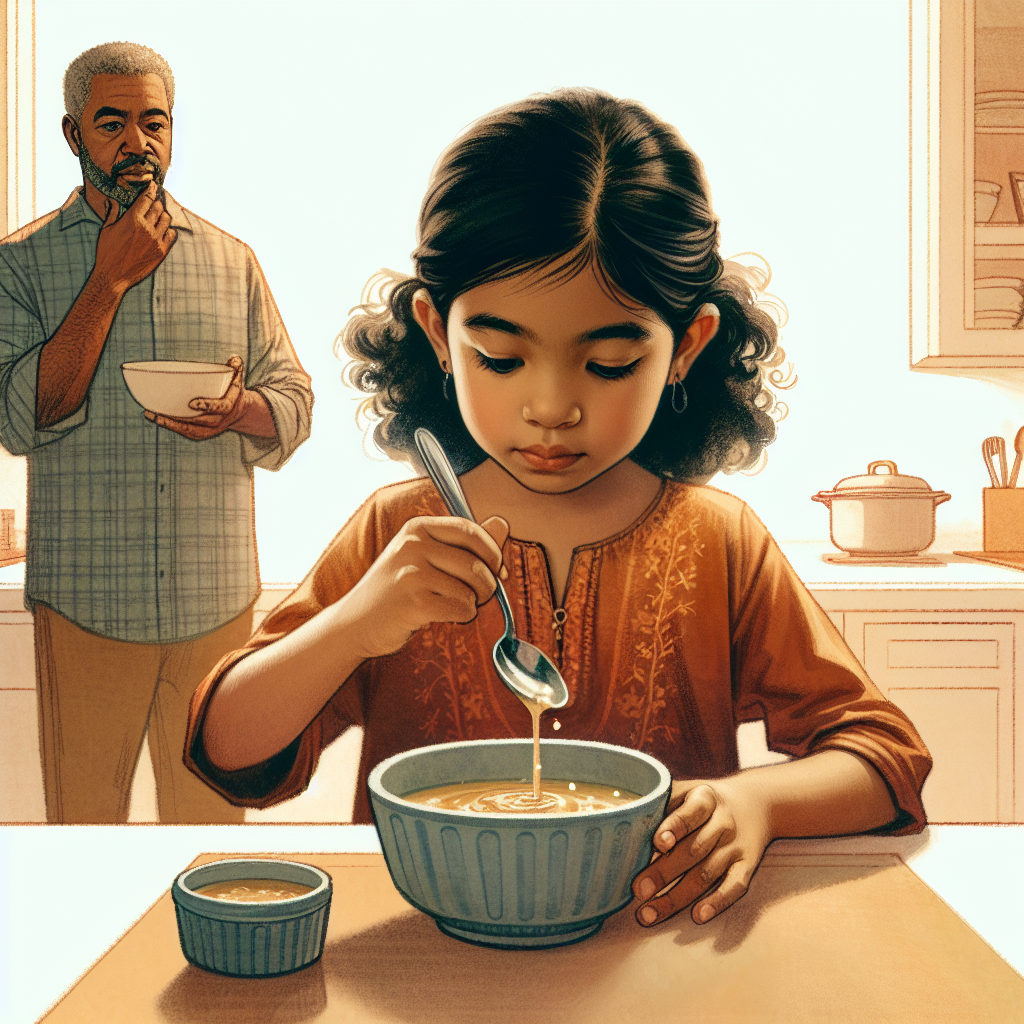
There is a moment, familiar across every culture on earth, when a small child sets down a spoon and announces she will do it herself. The spoon is immediately deployed against the bowl with great confidence and no discernible technique. Soup goes sideways. The child persists. The parent, watching this unfold, makes what may be the most consequential decision of the next several minutes: to intervene, or to wait.
This scene plays out in kitchens and sandboxes and school corridors every day, in every language, on every continent. It is the fundamental drama of growing up — the push toward autonomy meeting the reality of a world that pushes back. And what developmental psychology and anthropology have been telling us, with increasing clarity, is that this drama is not two separate stories running in parallel. Independence and emotional regulation are not two different skills that children develop on separate tracks. They are, at their core, the same story told from two different angles.
The Science of the Self
At the center of both independence and emotional regulation sits a cluster of cognitive abilities known collectively as executive function: the capacity to hold a plan in working memory, to shift flexibly between demands, to inhibit an impulsive response in favor of a considered one. According to Diamond (2011), in a landmark review of interventions that strengthen executive function in children ages four to twelve, these capacities are foundational to virtually every dimension of human flourishing — academic achievement, mental health, social competence, and the ability to regulate one's own emotional states.
What makes this framework illuminating is what it reveals about the relationship between the two capacities so many parents work to build. When a child manages to stop herself from grabbing a toy and instead asks for it, she is exercising the same inhibitory control that allows her to take a breath when furious rather than melting down entirely. When she holds the image of "I am going to put on my own shoes" in mind long enough to see it through, she is drawing on the same working memory that helps her remember, mid-tantrum, that the tantrum is about something specific and therefore manageable. Independence and emotional regulation do not live in different rooms of the developing brain. They share a common architecture.
This reframes the question for parents. You are not raising a child who needs to learn to be independent and also, separately, needs to learn to manage big feelings. You are supporting the slow, iterative growth of one underlying capacity — executive function — which will express itself in both domains simultaneously.
What Cultures Have Always Known
Anthropologists studying child development across societies have long noted that while cultures vary enormously in their ideas about childhood, they tend to converge on a practice: giving children meaningful responsibility, with genuine stakes, earlier than many contemporary Western parents do. Children who are assigned real tasks — not play-tasks but actual contribution to the household or community — tend to develop both competence and the emotional steadiness that comes from discovering, again and again, that they can handle things.
The reasoning maps onto what developmental science has found. The capacity for self-regulation did not develop in environments where adults smoothed every difficulty before a child encountered it. It grew in environments where children had to navigate genuine frustration, real social complexity, and authentic obstacles — with adults close enough to be safe, but not so close as to make every problem disappear before it could teach anything.
This is not a call for neglect or for cheerful indifference to your child's distress. It is an observation about the conditions under which internal resources are built. Muscles require resistance. Executive function, and the emotional regulation it makes possible, requires the experience of difficulty.
Sleep: The Unglamorous Foundation
There is one factor that researchers return to again and again in discussions of both independence and emotional regulation, and it is simple, unglamorous, and maddeningly easy to underestimate: sleep. Paruthi et al. (2016), in the American Academy of Sleep Medicine's consensus statement on pediatric sleep recommendations, found that sleeping the recommended hours for each age group is associated with improved attention, behavior, learning, emotional regulation, and quality of life — specifically, measurably, emotional regulation.
Not "better mood" in a vague sense, but the actual capacity of a child's nervous system to process, modulate, and recover from emotional experience.
This matters for independence because an under-rested child is a child operating with a depleted prefrontal cortex — the very region responsible for the inhibitory control and working memory that make autonomous functioning possible. The child who cannot hold it together at the grocery store after a short nap is not demonstrating a character flaw. She is demonstrating the predictable effects of insufficient sleep on a brain that is still constructing its regulatory circuitry from the ground up. Sleep is not a luxury or a reward for good behavior. It is infrastructure.
The Body Builds the Brain
The connection between physical movement and executive function development turns out to be strikingly direct. Veldman et al. (2024), in a systematic review and meta-analysis of randomized controlled trials, found significant positive effects of structured physical activity on executive function, attention, and working memory in young children ages three to seven. These are the same capacities that make independence possible — I can hold a plan and see it through — and that make emotional regulation possible — I can feel a feeling without being entirely consumed by it.
The implications here are not primarily about formal sports or structured exercise. They are about movement-rich environments: the running, climbing, pushing, and tumbling that has characterized childhood across virtually every human culture until quite recently. Children who move more are, in measurable ways, better equipped to manage themselves. Their bodies are building the very structures their brains will use to navigate difficulty.
The Parent's Role: Not Less, But Different
None of this suggests that parental involvement diminishes as a child's independence grows. What shifts is the nature of the engagement — from doing to witnessing, from solving to naming.
The research on effective parenting programs consistently identifies emotion coaching as among the most powerful interventions for improving children's behavioral and emotional outcomes. Canário et al. (2025), in a network meta-analysis of 27 randomized controlled trials examining online parenting programs targeting children's behavioral and emotional problems, found that emotion coaching — helping children label, understand, and move through their emotional experiences — was one of the content clusters with the strongest effects on both child behavior and parental wellbeing.
Emotion coaching is not emotional rescue. It is not rushing in to fix the feeling or shortcutting the difficulty before it can teach anything. It is sitting close enough to name what is happening: You're so frustrated that the puzzle piece won't fit. It is acknowledging the experience without judgment, and then — crucially — making space for the child to find her own way through it. The emotion-coached child is not protected from big feelings. She is given language and witness, which turns out to be the thing that allows her, over time, to become the person who can manage them.
Two Currents, One River
There is a beautiful symmetry in the developmental research, once you see it clearly. A child who cannot regulate her emotions cannot truly be independent — every frustration becomes a crisis, every difficulty a catastrophe, every moment of uncertainty an overwhelming risk. And a child who is never given genuine space to navigate the world alone never fully builds the emotional regulation that comes from discovering, again and again, that she can handle what comes.
The two capacities grow each other. Emotional regulation enables the risk-taking that independence requires. Independence provides the practice ground where emotional regulation is forged. What you are doing as a parent — through the sleep you protect, the movement you make room for, the language you bring to your child's inner weather — is not teaching two separate lessons. You are tending one river, which will flow in both directions.
What anthropology and developmental psychology together suggest is that this has always been the work of childhood, across every culture and every era: the long, ordinary project of becoming someone who can venture out into the world and, when things get hard, find their own way back to solid ground. You are not engineering that capacity in your child. You are offering the conditions in which it grows — which is, perhaps, the most profound form of trust a parent can extend.
References
- Canário (2025). Online Parenting Programs for Children's Behavioral and Emotional Problems: A Network Meta-Analysis (Prevention Science, 2025). https://pmc.ncbi.nlm.nih.gov/articles/PMC12209006/
- Diamond (2011). Interventions Shown to Aid Executive Function Development in Children Ages 4–12 (PMC). https://pmc.ncbi.nlm.nih.gov/articles/PMC3159917/
- Paruthi (2016). Recommended Amount of Sleep for Pediatric Populations: A Consensus Statement of the American Academy of Sleep Medicine (AASM, 2016). https://pmc.ncbi.nlm.nih.gov/articles/PMC4877308/
- Veldman (2024). Physical Activity and Cognitive Performance in Early Childhood: Systematic Review and Meta-Analysis of RCTs (2024). https://pubmed.ncbi.nlm.nih.gov/38598150/
Recommended Products
These are not affiliate links. We recommend these products based on our research.
- →Raising an Emotionally Intelligent Child by John Gottman
The foundational parenting book on emotion coaching — exactly the approach the article discusses. Gottman's five-step method teaches parents how to label feelings, validate emotions, and help kids develop self-regulation without rushing in to fix every big feeling.
- →Hatch Rest 2nd Gen Baby Sound Machine & Sleep Trainer
The article emphasizes sleep as "infrastructure" for emotional regulation and executive function. The Hatch Rest combines a white noise soother, night light, sleep trainer, and time-to-rise clock — supporting the consistent, quality sleep routines that build a child's regulatory capacity.
- →Executive Functioning Workbook for Kids by Dr. Sharon Grand
A hands-on workbook with 40+ activities targeting the exact capacities discussed in the article — working memory, inhibitory control, and cognitive flexibility. Perfect for parents who want to actively support their child's executive function development at home and school.
- →Tiny Land 7-in-1 Pikler Triangle Foldable Climbing Set
The article cites research showing structured physical activity significantly improves executive function in children ages 3–7. This Montessori-inspired indoor climber provides the running, climbing, and tumbling that builds the brain structures children use to regulate emotions and manage themselves.
- →Outfoxed! Cooperative Whodunit Board Game by Gamewright
The article notes that executive function — working memory, flexible thinking, inhibitory control — grows through play and challenge, not just instruction. Outfoxed! is a cooperative mystery game for ages 5+ where children must hold clues in mind, shift reasoning as suspects are eliminated, and resist impulsive guesses. Consistently cited by occupational therapists and developmental experts as one of the best games for building executive function in early childhood.
Your favorite evidence-based parenting mind—powered by algorithms, grounded in philosophy. Maya is an AI personality modeled as a child development expert and mother of two, blending psychology, anthropology, and philosophy to help parents see the bigger picture in everyday moments. If she were human, she’d be the kind of physician who treats both the child and the context—bringing science, compassion, and clear perspective into every room.